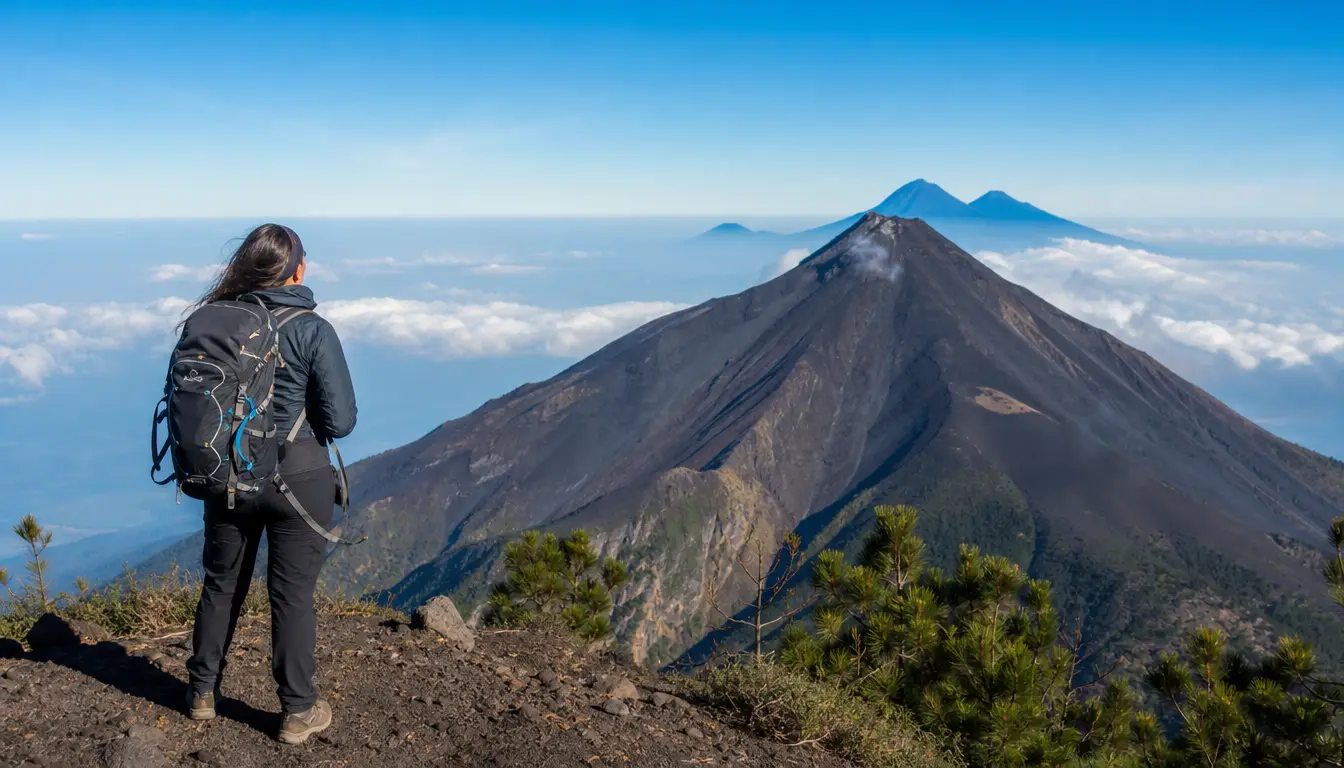
Preparing for the Acatenango Volcano Hike Training Tips
Most people figure out they are underprepared within twenty minutes of leaving the trailhead at La Soledad. The trail starts steep, cuts through dusty farmland, and offers no gentle warm-up before tilting into loose volcanic dirt. If you want to know how to train for acatenango hike conditions without wanting to quit halfway up, you need to prepare for continuous elevation gain rather than flat-distance mileage. Your lungs will burn, but your legs carry the true burden.
I learned this the hard way after watching gym regulars drop to their knees on the first ridge. Acatenango climbs nearly 5,160 feet over roughly five miles, topping out at 13,044 feet above sea level. Standard gym workouts do not fully prepare you for soft cinder ash sliding beneath your boots with every step. You need a mix of leg strength, slow aerobic volume, and practical preparation to tackle this volcano hike without feeling wrecked for the rest of your Guatemala trip.
Book your acatenango volcano hike experience:
Understanding the Fitness Required for Acatenango Hike
You do not need to be an ultra-marathoner. You do, however, need strong calves and stubborn lungs. When people ask about the fitness required for acatenango hike trips, they usually expect a bench press or running benchmark, but neither matters much out here. The real challenge is carrying an 18-pound pack on a relentless 25-degree incline for six straight hours.
The trail offers zero flat breaks. You take a step up, your foot slides back three inches in loose dirt, and your hip flexors work twice as hard to pull you forward. If you want an idea of how the grade affects your body, checking the difficulty distance elevation gain on Acatenango helps put the sheer vertical wall into numbers. It is pure, grinding climbing.
Your cardiovascular engine needs to work in zone two, which means keeping a steady, slow output for hours without redlining. If your heart spikes to 175 beats per minute five minutes after leaving the van, you will burn out before lunch. Pacing beats raw speed every single time.
Note: Most hikers carry at least four liters of water, warm summit layers, and personal snacks in their packs, which adds an unexpected 15 to 22 pounds to your back if your tour operator does not provide porters.
How to Train for Acatenango Hike: The Leg and Cardio Phase
Forget flat treadmill runs. Long road runs teach your body to bounce forward, whereas volcano training requires pushing upward against gravity. You need stair climbing, weighted lunges, and slow, heavy step-ups. If you have access to a gym, the revolving stepmill is your best tool. Set it to an easy pace, put on a pack loaded with 15 pounds of books, and stay on it for 45 minutes without gripping the handrails.
I think the handrails are where most people cheat themselves. Leaning your forearms on the machine removes your body weight from the equation, and out on the volcano, there are no handrails to save your knees. To build the specific acatenango hike fitness required to survive the trail, work these movements into your weekly routine:
- Weighted box step-ups: Step onto an 18-inch box with dumbells in hand, controlling the descent slowly rather than dropping down.
- Eccentric heel drops: Stand on the edge of a step and lower your heels deeply to build ankle mobility and protect your Achilles tendon from steep slopes.
- Goblet squats with pauses: Hold a 35-pound kettlebell, drop into a deep squat, and hold for three seconds to build endurance in the bottom position.
- Farmer carries: Grab two heavy weights and walk slowly for 90 seconds to train your traps, back, and core for pack loads.
These exercises build the structural resilience your joints need. Going down the volcano the following morning puts massive strain on your patellar tendons, often hurting more than the hike up. Eccentric quad strength saves your knees on that loose, sliding descent.
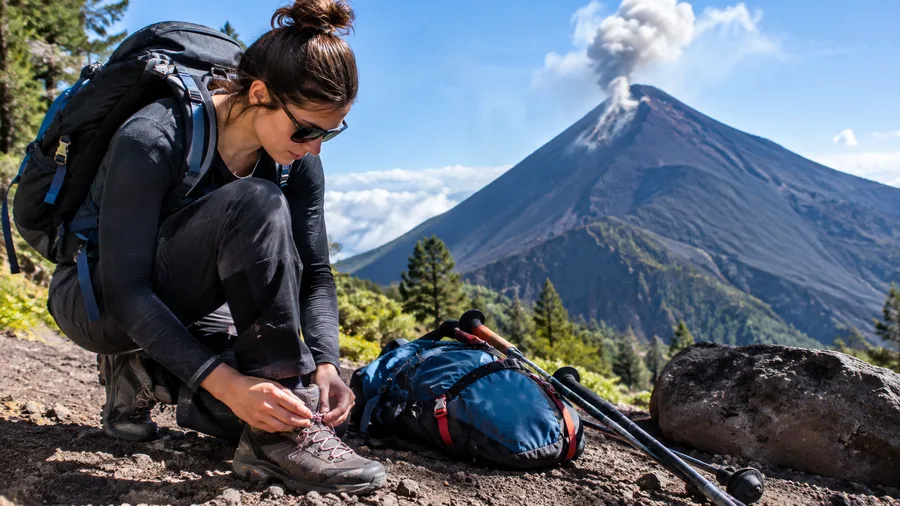
A Realistic 8-Week Volcano Training Schedule
Starting your acatenango volcano hike training eight weeks out is ideal, though four weeks is enough if you already have a baseline level of fitness. The goal is building aerobic capacity without beating yourself into exhaustion before you even board your flight to Guatemala.
Consistency matters far more than hero workouts. Doing three moderate sessions each week beats doing one massive weekend workout that leaves you hobbled on the couch for days. Here is a simple, structured progression that targets the exact muscles you will rely on during the climb:
| Week | Primary Focus | Pack Weight | Cardio Session | Leg Workout Focus |
|---|---|---|---|---|
| Weeks 1-2 | Base Building | 0 lbs | 35 min stairmill or incline walk | High-rep bodyweight squats and lunges |
| Weeks 3-4 | Load Adaptation | 8-10 lbs | 45 min incline walk at 12% grade | Weighted step-ups and calf raises |
| Weeks 5-6 | Endurance & Volume | 15 lbs | 60 min stairmill at steady pace | Goblet squats, lunges, core planks |
| Week 7 | Peak Simulation | 18 lbs | 75 min outdoor hill hike or steps | Heavy carries and leg stamina circuits |
| Week 8 | Taper & Recovery | 5 lbs | 30 min light walking on flat ground | Mobility, hip stretching, sleep |
Notice that week eight drops the volume way down. Many hikers keep pushing hard right until travel day, then arrive in Antigua already sore and stiff. Rest allows your muscles to store glycogen and repair tissues, which you will need when trudging past the cloud forest line.
Book your acatenango volcano hike experience:
Simulating the Altitude and Steep Volcanic Scree
No gym workout fully replaces 12,000 feet of altitude, but you can prepare your body to handle low oxygen stress. Altitude makes ordinary movements feel twice as hard. Your heart rate jumps simply from standing up, and your brain tells you to stop long before your muscles actually give out. You cannot fake altitude adaptation in a sea-level gym, but you can build a massive aerobic buffer so your baseline effort stays low.
Spending at least two full days in Antigua before your climb makes a massive difference. Sitting at 5,020 feet, Antigua gives your blood chemistry time to balance out before you jump straight into the clouds. Reading up on safety altitude tips for Acatenango hike will help you spot early signs of acute mountain sickness before they ruin your trip. Drink lots of water, skip the local beer for those two prep days, and let your body adapt.
Pro tip: Rent two trekking poles from the shop in town or hire them at the trailhead for 10 quetzales. They act like a second set of legs on the scree and take roughly 20 percent of the pressure off your quads on the descent.
To prep for the scree, find an area with loose sand, deep gravel, or wood chips. Running or hiking on loose surfaces forces the tiny stabilizer muscles in your feet and ankles to fire rapidly. A beach dune hike or an off-camber trail with dry dirt works wonders for training the nervous system to handle unpredictable foot slips.
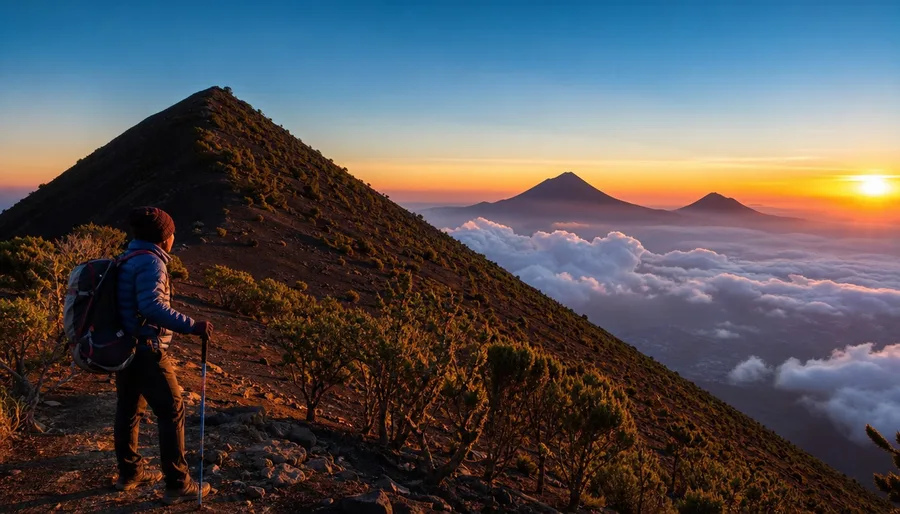
Can a Beginner Hike Acatenango and What Gear Matters Most
Can a beginner hike acatenango successfully? Yes, but only if they are honest with themselves about their pacing. I have seen couch potatoes make it to base camp because they took microscopic steps and kept moving, while marathon runners threw up on the trail because they sprinted the first two kilometers. It is a head game.
Joining an organized acatenango volcano hike tour helps because guides set a methodical tempo. Good guides use what locals call the "turtle step," an agonizingly slow shuffle that barely feels like walking. It seems too slow at first. After an hour, when the air thins and the tree line fades into barren rock, you realize that slow shuffle is the only reason your legs are still moving.
- Footwear with deep tread: Smooth running shoes turn the descent into a slip-and-slide; bring trail runners or broken-in hiking boots with aggressive lugs.
- Layered clothing system: You will sweat through your shirt at the base, but temperatures at base camp drop below freezing overnight.
- Headlamp with extra batteries: Summit pushes begin at 4:00 AM in pitch blackness across frozen dirt paths.
- Hydration salts: Electrolyte packets keep your muscles firing and help stave off altitude headaches better than plain tap water.
Mental stamina matters just as much as physical readiness. There will be a point around hour four where the trail steepens, the cloud layer closes in, and your legs feel completely heavy. Knowing that you trained your calves, lungs, and shoulders for that exact moment gives you the confidence to take the next step.
Frequently Asked Questions about how to train for acatenango hike
How fit do you really need to be for Acatenango?
You need a moderate to high level of stamina. If you can walk briskly uphill for an hour without gasping for breath and perform 50 bodyweight squats without severe muscle soreness the next morning, you can complete the hike with sensible pacing.
How do you train for this if you live in a completely flat city?
Find tall parking garages, use the gym stairmill, or do treadmill walks at the maximum 15 percent incline. Weighted step-ups onto a sturdy bench with a backpack recreate the same quad and glute burn as volcanic trails.
Is altitude sickness guaranteed on Acatenango?
No, but mild symptoms like slight headaches, loss of appetite, and light nausea are very common above 11,000 feet. Hydrating heavily and spending two nights resting in Antigua beforehand drops your risk significantly.
Quick Reference
- Elevation gain: 5,160 feet (1,570 meters)
- Summit altitude: 13,044 feet (3,976 meters)
- Recommended training timeline: 6 to 8 weeks
- Key gym machine: revolving stairmill with a weighted pack
- Essential trail gear: two trekking poles and deep-tread boots
Book your acatenango volcano hike experience:
Before You Lace Up
Standing outside your tent at night while neighboring Fuego shoots orange lava into the dark sky makes every drop of sweat worth it. It is one of the most stunning sights in Central America, but the mountain makes you earn every foot of the view. Start climbing your local stairs, load some weight into your pack, and give your body the preparation it deserves so you can look up at the summit and enjoy the climb.
Read more about acatenango volcano hike.