Best Time to Hike Acatenango Volcano Season Weather Sunrise
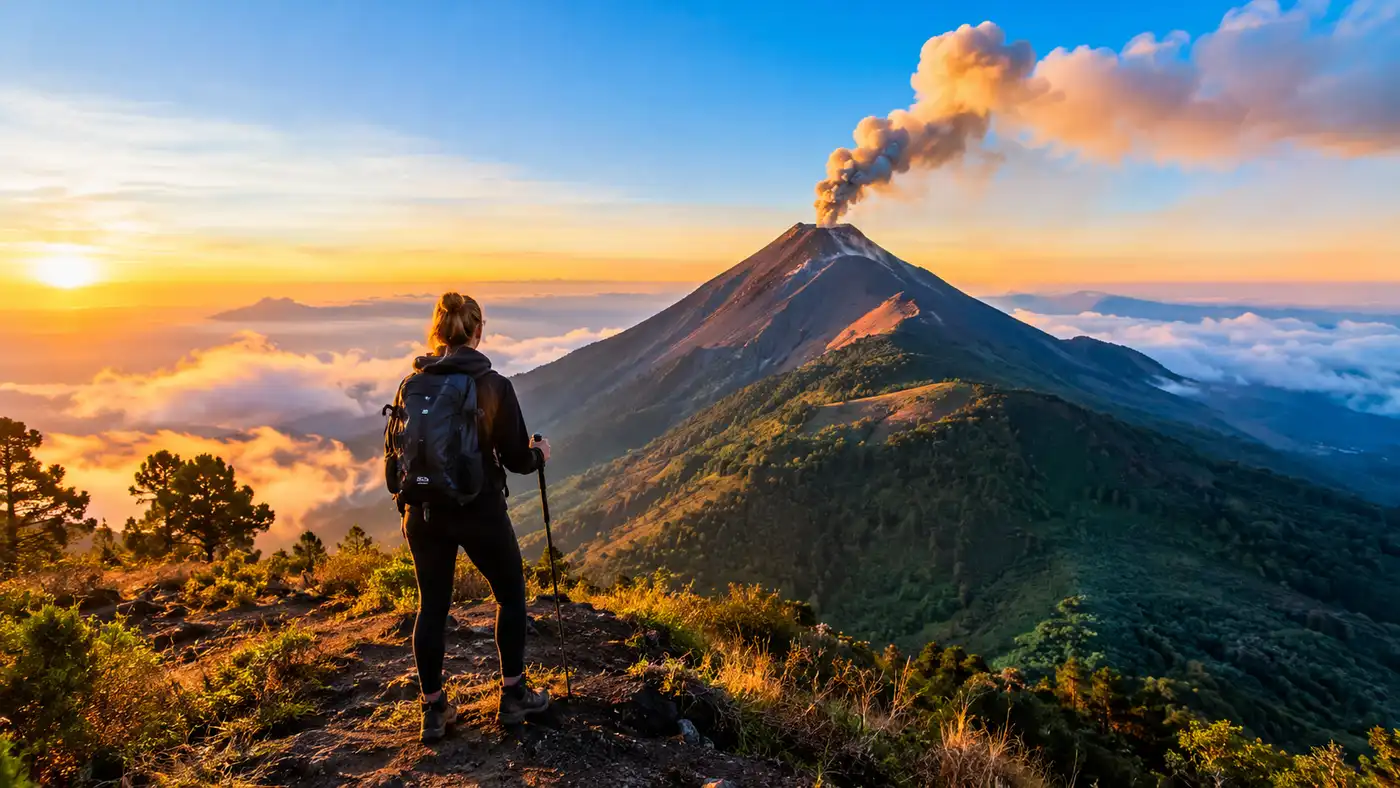
You freeze your tail off at 3,600 meters regardless of the month. People imagine Central America as universally balmy, but standing on a ridge of volcanic scree while gale-force gusts whip off the Pacific changes your mind in roughly four seconds. Figuring out the best time to visit acatenango volcano comes down to what you can tolerate: choking dust and freezing crowds under clear stars, or wet socks and thick mountain fog that swallows erupting lava before you can see it.
Most travelers want one thing. They want to sit outside a shelter with a metal mug of instant coffee and watch Volcán de Fuego blast incandescent red rocks into a black sky every twenty minutes. If the weather goes bad, you climb five hours through four distinct climate zones just to stare into a blank wall of wet grey mist. Here is the unvarnished breakdown of seasons, temperatures, sunrise pushes, and trail conditions so you actually get the view you sweat for.
Book your acatenango volcano hike experience:
Dry Season Reality: Best Time to Hike Acatenango Volcano Guatemala Dry Season
The standard recommendation points directly to December through April. That window represents the
Clear skies come with a cost. The volcanic ash on the lower switchbacks through the farmland turns to fine talcum powder. Every step churns up grit that coats your teeth, your shins, and the inside of your nose. Thirty other hikers will be kicking that same dust into your face on the morning ascent. By February, the trail is bone dry and slippery, meaning you slide backward half a step for every two steps forward on the steepest dirt sections.
Nighttime temperatures drop hard during these months. Cold fronts from North America slide down through Mexico, driving the mercury at base camp below freezing. Frost coats the grass outside the tents by 2:00 AM. If you pack light because Antigua felt warm in shorts at noon, you will spend the entire night shivering violently inside a worn-out sleeping bag. Still, your chances of seeing clear explosions from Fuego sit around 85 percent, which makes the frozen fingers completely worthwhile.
Pro tip: Pack a lightweight buff or bandana in your daypack to pull over your mouth during the first two hours of farmland hiking, because the dry season dust is brutal on your lungs.
Wet Season Hazards and the Truth About Low Season
May through October brings the rains. If you ask locals in town when is the best time to hike acatenango, almost none will tell you to go in August. Yet dozens of travelers still make the climb daily throughout the summer months. Honestly, hiking in the green season is not automatically a disaster, but the odds shift against you.
Mornings during the wet season often dawn remarkably clear. The valleys are emerald green, wild lupines bloom along the tree line, and the air smells like wet pine needles instead of ash. You start hiking around 9:00 AM under gentle sunshine. Then, around 1:30 PM, the clouds boil up from the southern coast. By the time you reach base camp, a steady mountain deluge has set in, turning the clay paths into muddy chutes that will test your knees on the descent.
If you choose to hike during the rainy months, keep a few strategic rules in mind:
- Morning departures: Look for guides willing to leave Antigua by 7:00 AM to beat the typical 2:00 PM afternoon thunderstorm.
- Waterproof pack liners: Standard backpack covers fail under sustained mountain rain; line the inside of your pack with a heavy 50-liter contractor trash bag.
- Dry camp clothes: Seal one set of thermal underwear and wool socks in an airtight ziplock bag and never put them on until you are under shelter.
- Trail footwear: Deep-lug trail runners dry faster than heavy leather boots that stay waterlogged for three days.
Sometimes the rain stops around 8:00 PM. The cloud deck sinks into the valley below your campsite, forming a white sea that glows beneath the moon while Fuego erupts into open air above the clouds. That kind of cloud inversion makes you feel like you are camping on another planet. Other nights, the gale never relents, the tent canvas leaks, and you wake up to dense white fog at dawn without having caught a single glimpse of molten lava.
Month by Month Weather Breakdown for Hiking Acatenango
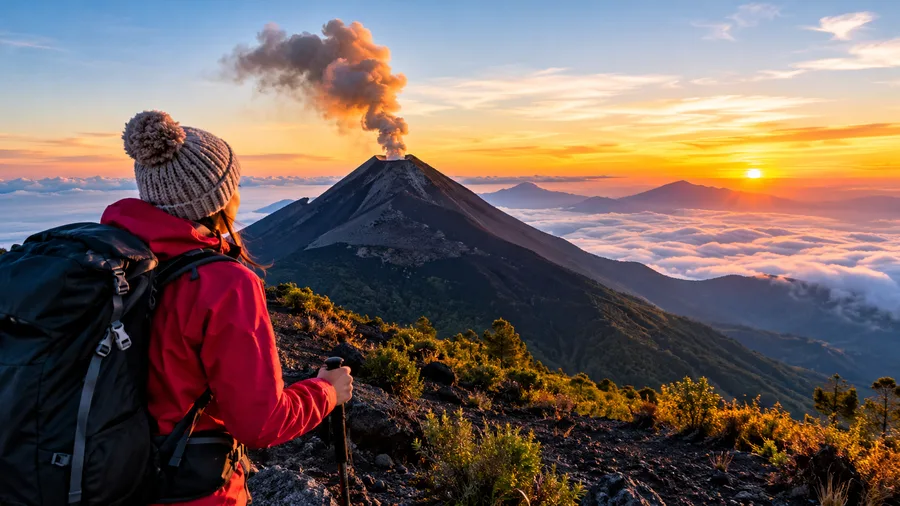
Deciding on the best month to hike acatenango requires balancing trail traffic against weather patterns. Peak tourist season hits hard between Christmas and mid-January. If you want solitude, you will not find it then. February and March offer the most reliable weather patterns, while shoulder months offer their own quiet perks if you pack carefully.
Check out our detailed month-by-month guide to hiking acatenango volcano to see specific crowd patterns throughout the year. The table below outlines what you can realistically expect on the mountain across different quarters.
| Months | Rainfall Chance | Base Camp Night Temp | Trail Dust / Mud | Fuego Visibility |
|---|---|---|---|---|
| Nov - Jan | Low (under 15%) | -2°C to 4°C | Moderate dust | Excellent |
| Feb - Apr | Very Low (under 10%) | 0°C to 6°C | Extreme dust | High (occasional haze) |
| May - Jul | High (around 65%) | 3°C to 8°C | Slick mud | Moderate (evenings clouded) |
| Aug - Oct | Very High (over 75%) | 2°C to 7°C | Heavy mud / ruts | Unpredictable / low |
November is arguably my favorite window. The rains stop abruptly around the first or second week, the dust has not had time to dry out into choking powder yet, and the high ridges stay lush and green. The temperatures are cool but manageable, hovering around 3 degrees Celsius at night. By April, the humidity creeps back, heat haze builds in the afternoon, and farmers burn fields in the surrounding highlands, which can obscure distant views of Lake Atitlan from the summit.
Book your acatenango volcano hike experience:
The Acatenango Summit Push Time Sunrise and Night Conditions
Base camp sits below the true summit. To reach the top of Acatenango at 3,976 meters for dawn, your guides will shake your tent flap awake in the freezing dark. The standard acatenango summit push time sunrise schedule begins between 3:45 AM and 4:15 AM depending on the fitness of your group and the season.
You hike through absolute darkness on loose volcanic scree known as the gravel slope. It takes about an hour and fifteen minutes. For every step forward, you sink backward three inches into black volcanic gravel. The wind cuts right through unlined trousers on this exposed saddle. It feels like climbing a steep sand dune in a blizzard, except without the snow. Looking over your shoulder every few minutes keeps you going, because Fuego regularly shoots glowing fountains of rock into the velvet dark while you climb.
Getting your summit gear dialed in matters more than what you wear during the ascent through the cloud forest. You will sweat on the walk up, stop at the windy peak, and instantly freeze if you cannot layer up. Our full review of gear clothing for acatenango volcano hike covers the exact three-layer system required for this summit push.
Note: Summit winds on the western lip frequently exceed 60 kilometers per hour at dawn; bring a fleece beanie that covers your ears completely, or the windburn will give you an instant headache.
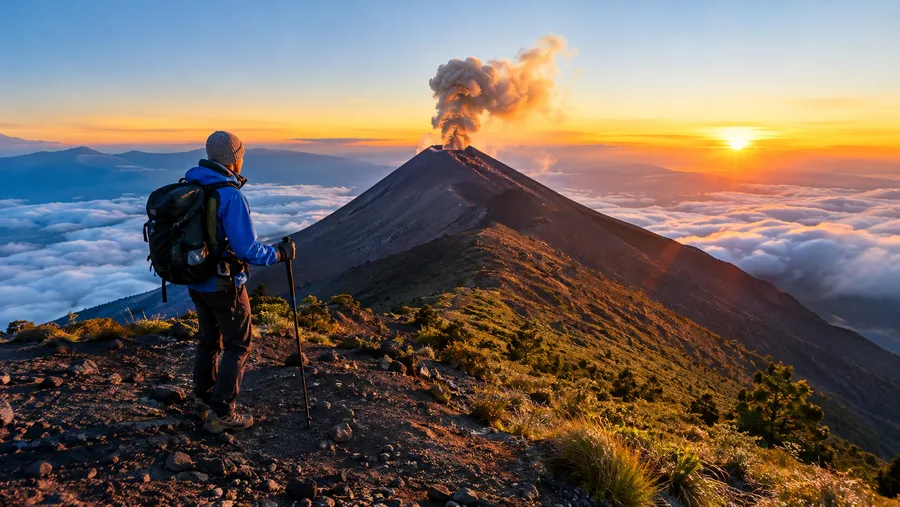
Dawn breaks fast in the tropics. First, a thin band of neon orange and purple appears over the Caribbean horizon behind Agua Volcano. Within twenty minutes, the full golden disc emerges, throwing a massive triangular shadow of Acatenango across the clouds below. It is easily one of the most stunning sights in Central America, provided you made the summit before the light fully washed out the contrast.
Best Time to Visit Volcan Fuego in Guatemala and Avoiding Crowds
If your primary motivation is watching eruptions, you want total darkness. Fuego erupts constantly year-round, throwing ash plumes by day and glowing incandescent rock by night. During full daylight, an eruption looks like a puffy grey cloud, impressive, but nowhere near as mesmerizing as the fiery spray against a pitch-black sky. This makes the late evening hours between 8:00 PM and midnight the prime viewing slot.
The best time to visit volcan fuego in guatemala aligns directly with the new moon phase. Plan your trek around the lunar calendar if you can swing the dates. A bright full moon illuminates the jagged ridges of the volcano beautifully, but it washes out the faint red trails of glowing rocks tumbling down the flanks of the cone. On a moonless night in January, the eruptions light up the entire crater rim with terrifying intensity.
Trail crowds peak heavily on weekends. Hundreds of hikers leave Antigua on Saturday mornings, creating bottlenecks on the single-track switchbacks near the registration hut. Campsites can feel noisy, with music spilling out of neighboring party groups until midnight. Booking a departure on a Tuesday or Wednesday gives you a completely different wilderness experience.
- Midweek departures: Hike on Tuesday or Wednesday to avoid loud crowds and shared base camp congestion.
- New moon timing: Match your trip to dates with less than 25 percent lunar illumination for the brightest volcanic glow.
- Shoulder weeks: Late November and early May offer great balances of lower foot traffic and acceptable weather windows.
Frequently Asked Questions about best time to visit acatenango volcano
What is the coldest month to hike Acatenango?
January is generally the coldest month on the peak. Nighttime temperatures at base camp routinely dip to -3°C, and summit wind chill can make it feel closer to -10°C before dawn.
Can you hike Acatenango during the rainy season?
Yes, tours operate every single day of the year. You must prepare for heavy afternoon showers, slippery mud trails, and the realistic possibility that cloud cover might completely obscure Fuego.
What time does the sunrise hike start from base camp?
Most guides wake groups up around 4:00 AM. The final ascent to the true peak takes roughly 60 to 90 minutes of steady slogging through loose scree in the dark.
Quick Reference
- Best overall dry months: December through March
- Coldest overnight temperatures: December and January (-3°C)
- Rainiest climbing period: June through September
- Typical summit push wake-up: 3:45 AM to 4:15 AM
Book your acatenango volcano hike experience:
The Bottom Line
Do not overthink the forecast too far in advance because mountain microclimates in Guatemala change rapidly. If you have the flexibility to wait in Antigua for two or three days, watch the local summit reports and book your trek when a clear three-day window appears. Pack warm layers you think you will not need, rent two trekking poles at the trailhead for 10 quetzales each, and head up the dirt. Standing on the rim while the ground rumbles beneath your boots is worth every second of dust and frozen wind.
Read more about acatenango volcano hike.