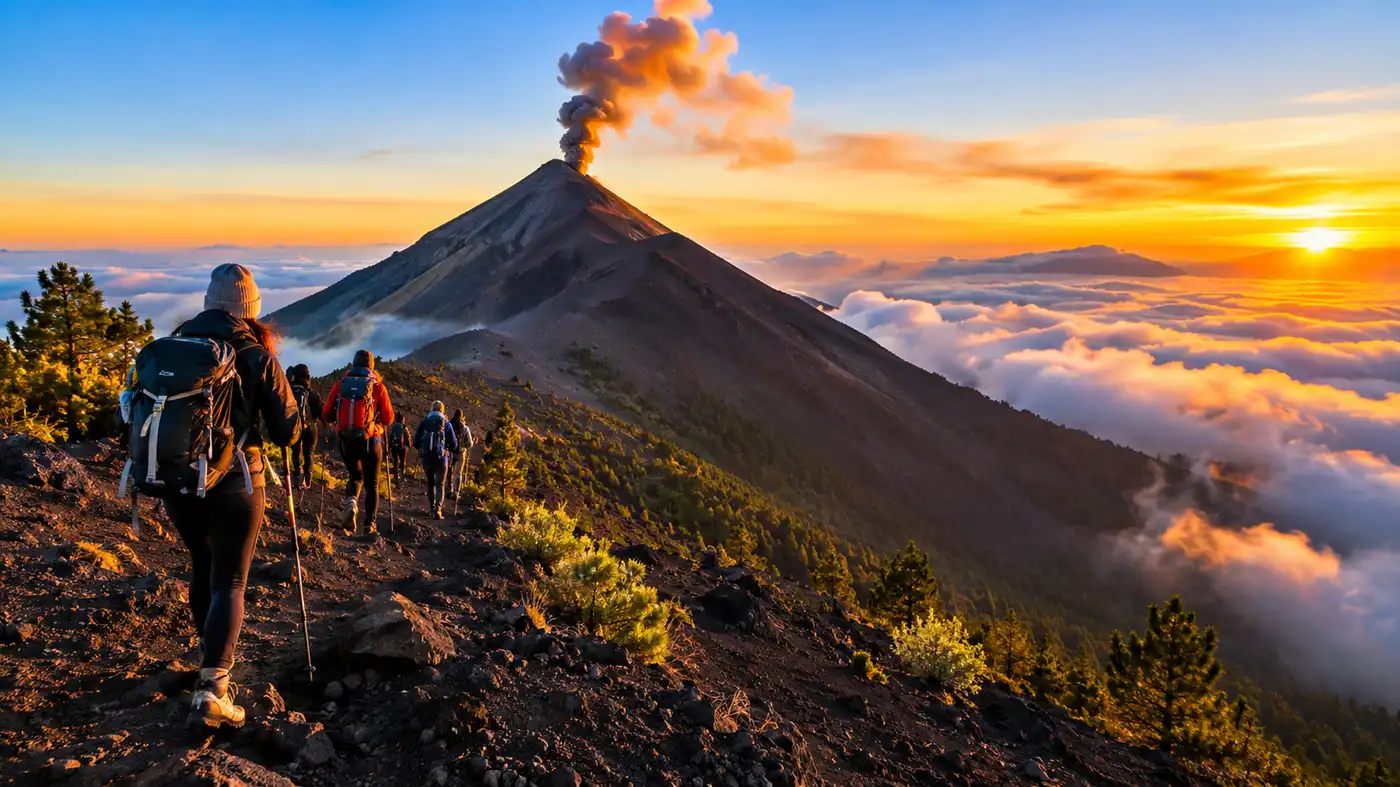
Night Hike Sunrise Adventures on Acatenango Volcano
My toes went numb somewhere around 9:00 PM. We were huddled around a smoky campfire eating watery noodle soup, staring across a black canyon at Volcan de Fuego throwing fountains of orange rock into the sky. You spend months looking at glossy photos on Instagram, but nothing prepares you for the sheer sensory overload of an acatenango volcano night on the ridge. The ground shakes beneath your camp boots every twenty minutes with a low growl that hits your ribs before your ears register the sound.
Most hikers show up in Antigua thinking this is just a strenuous day walk with a sleepover attached. It is not. It is an alpine trial where the darkness changes the rules completely. Between midnight frost, loose gravel that slides back two feet for every three you gain, and thin air at nearly 4,000 meters, getting to dawn requires stubbornness. This guide walks you through what actually happens once the sun dips behind the Pacific cloud bank, how to handle the brutal pre-dawn push, and why the frozen misery evaporates the second the horizon catches fire.
Surviving the Acatenango Volcano Night at Base Camp
Base camp is raw.
Depending on which local guide outfit you booked with, your camp sits between 3,550 and 3,750 meters on the eastern shoulder of the mountain. Some agencies have plywood A-frame shacks lined with foam pads; others pitch dome tents on carved-out dirt terraces buttressed with pine logs. By 6:30 PM, the wind whips across the saddle from the valley below, and the temperature plummets from pleasant t-shirt weather down to freezing within forty minutes.
Everyone gathers around the fire ring because staying inside a tent means freezing alone in a thin sleeping bag. You drink instant coffee sweetened with block brown sugar from tin mugs, listening to the guides banter in Kaqchikel. The air smells like pine sap, sulfur, and burning firewood. The real show, of course, is right across the void. Fuego sits roughly three kilometers away. In daylight, it looks like a scarred gray pyramid puffing ash clouds. After dark, every puff becomes a molten fountain.
Note: Wind patterns shift violently around 8:00 PM, occasionally blowing ash and sulfur fumes right over the western ridge camps. If you have sensitive lungs or asthma, keep a buff or particulate mask inside your jacket pocket where you can reach it quickly.
Sleep is mostly an illusion up here. The mountain rumbles shake dirt loose inside your tent roof, dusting your face while you doze. The wind snaps the tent fly with the crack of a pistol shot every few minutes. Honestly, you might get three hours of genuine rest if you brought earplugs. If you forgot them, you will spend the night counting eruptions and wondering why you paid money to sleep on rocks.
Book your acatenango volcano hike experience:
The 4:00 AM Push: Acatenango Volcano Hike Sunrise Summit
The wake-up call comes without mercy. Your guide raps on the tent fabric at 3:45 AM, whispering that hot tea is ready. Crawling out of a sleeping bag into twenty-degree air is easily the hardest mental barrier of the entire trip. Your boots will feel stiff from the frost, and tying the laces with cold fingers takes three times longer than usual. You drink a cup of sugary oat drink, strap on your headlamp, and fall into a silent single-file line.
This final stretch to the peak takes roughly an hour and twenty minutes, yet it feels like a half-day march. You leave the tree line behind almost immediately. Above base camp, the terrain turns into deep scree - volcanic sand mixed with crumbly pumice pebbles. For every step upward, your heel slides back through the grit. It feels like climbing a steep sand dune wearing a heavy winter coat. Your breathing turns loud and ragged because the oxygen level at this altitude drops by roughly forty percent compared to sea level.
Looking up the slope in the pitch black, all you can see is a zigzagging chain of tiny yellow headlamp beams winding into the stars. No one talks. You hear heavy boots scraping rock, trekking poles clacking against stone, and people pausing every fifteen steps to catch their breath. If you are struggling with the terrain or pacing, checking our guide on gear and clothing for the climb will help you understand why proper layers and poles save your sanity here.
Then the false dawn begins. A pale violet stripe bleeds across the eastern horizon behind the silhouetted cones of Agua and Pacaya. The visual reward hits before you even reach the weather station on the true summit, giving you the adrenaline jolt needed to conquer the final forty vertical meters.
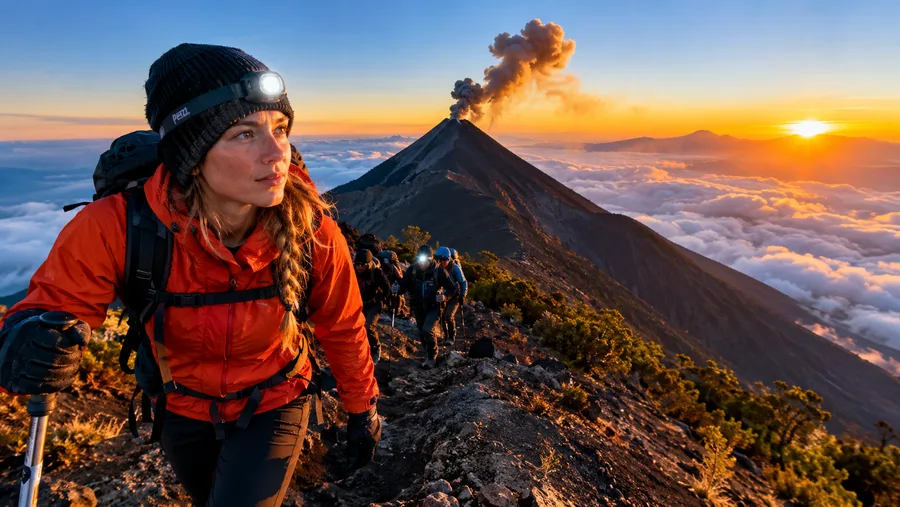
Timeline of an Acatenango Volcano Night and Morning
To plan your pacing and energy, it helps to see how the hours actually divide up between dusk and dawn. Below is the typical breakdown for hikers doing the classic two-day overnight route.
| Hour | Location & Activity | Elevation | Average Temp |
|---|---|---|---|
| 5:30 PM | Base camp arrival, watching sunset over cloud inversion | 3,600 m | 8°C (46°F) |
| 7:00 PM | Dinner around fire, night photography of Fuego | 3,600 m | 2°C (35°F) |
| 9:30 PM | In sleeping bags, intermittent sleep between eruptions | 3,600 m | -2°C (28°F) |
| 4:00 AM | Wake-up, tea, start scree ascent under headlamps | 3,650 m | -4°C (25°F) |
| 5:25 AM | Acatenango summit ridge, waiting for sunrise | 3,976 m | -6°C (21°F) |
| 7:00 AM | Return to base camp, breakfast, pack gear | 3,600 m | 5°C (41°F) |
Timing varies by thirty minutes depending on your group's speed and trail conditions. During the wet months, muddy lower tracks can push camp arrival later, which ruins your chance to watch the valley sunset. Choosing the right month makes a massive difference, as detailed in our guide on the best time to hike Acatenango for weather and sunrise views.
Book your acatenango volcano hike experience:
Cold Weather Gear That Actually Works at 3,976 Meters
Guatemala is tropical, so travelers arrive in Antigua packing shorts, sandals, and linen shirts. They get caught off guard by the biting cold on the peak. At 4:00 AM, the wind chill on the bare crater rim regularly drops below minus eight Celsius. If your layers are cheap cotton, you will be shaking uncontrollably before the sun appears.
You need a deliberate layering system rather than one giant, bulky winter parka:
- Base layer top and bottoms: merino wool or synthetic thermal leggings that wick away sweat from the grueling walk up so you do not freeze when you stop moving.
- Insulating mid-layer: a packable fleece or down jacket with at least 650-fill power that packs small inside your daypack during the sunny daytime hike.
- Windproof outer shell: a hooded rain jacket that stops the freezing gale cut directly through your fleece on the bare ridge.
- Head and hand coverage: a thick beanie that covers your ears completely and wind-resistant gloves, because metal trekking poles leech heat from bare fingers in minutes.
Pro tip: Stash your phone, camera spare batteries, and headlamp inside your inner jacket pocket or sleeping bag overnight. Extreme alpine cold drains lithium batteries in about fourteen minutes flat, leaving you with a dead camera right as the sun crests the clouds.
Bring two pairs of wool socks. Wear one pair while hiking up from the trailhead, and save the clean, bone-dry pair exclusively for the tent and summit push. If you put cold, sweat-damp socks back on at 4:00 AM, your feet will hurt within ten minutes.
What the Summit Sunrise Actually Feels Like
The wind on the crater rim is brutal. It hits you the second your head clears the final ridge crest. Most people huddle behind the concrete foundation of the old radio shelter to escape the gusts while waiting for the sun.
When it happens, the sky transforms fast. What was indigo ten minutes earlier turns into a blazing band of crimson, peach, and gold stretching all the way to the Pacific coastline. Below you, a white ocean of clouds covers the valleys, leaving only the dark cones of Guatemala's volcanic arc poking through like islands in a sea of foam. The shadow of Acatenango itself projects westward across the clouds - a massive, perfect blue triangle cast across fifty miles of sky.
To your left, Fuego puts on its morning show. In the daylight, you can finally see the massive gray plume billow thousands of feet upward before drifting eastward over the coffee farms. The sound arrives delayed, like thunder rolling across an empty canyon. Seeing an active volcano erupt in bright daylight while standing on a frozen summit is something you will talk about for twenty years.
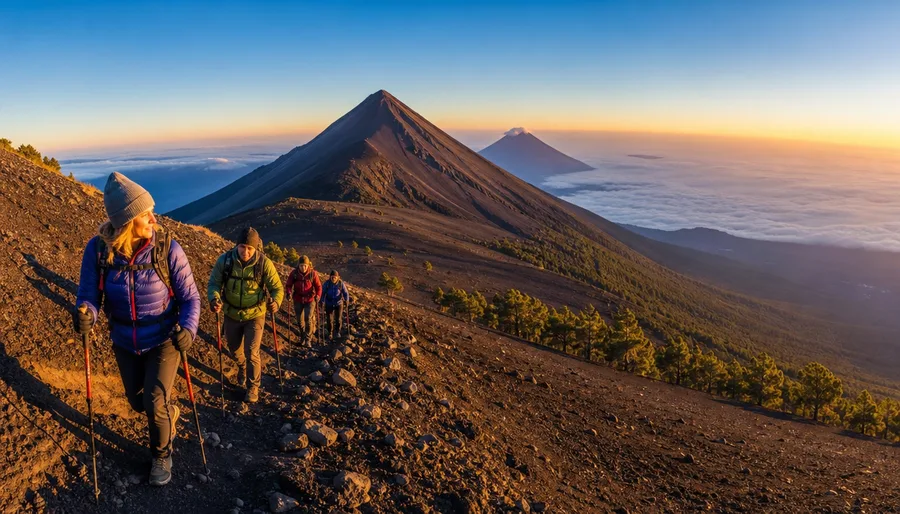
Scree Surfing: The Morning Descent
Going down is chaotic, messy, and strange fun.
The same scree slope that nearly broke your spirit at 4:30 AM turns into a giant gravel ski slope on the way down. Guides teach you to lean back on your heels, bend your knees, and slide through the deep pumice. You take massive, gliding steps, sinking ankle-deep into black volcanic dust. What took seventy-five agonizing minutes to climb takes about fifteen minutes to descend.
Here are the practical realities of the trek down to keep in mind:
- Dust protection: pull your buff over your nose and mouth, because thirty people running down loose scree creates a gray cloud that fills your lungs instantly.
- Knee management: shorten your trekking poles slightly and let your thighs absorb the downhill rhythm rather than locking your joints against the gradient.
- Boot drainage: expect to dump out half a cup of black gravel from each boot once you reach base camp for breakfast.
You pack up camp around 8:00 AM, eat pancakes or eggs prepared by the team, and begin the four-hour march back to the farm gate at La Soledad. Your legs will be shaky. Your fingernails will be gray with ash. But the feeling of finishing the acatenango volcano night experience stays with you long after you scrub the dust out of your hair in Antigua.
Frequently Asked Questions about acatenango volcano night
How cold does it actually get during an Acatenango volcano night?
Temperatures at base camp typically hover around freezing (0°C to -2°C) year-round. At the summit during sunrise, wind chill frequently drops conditions down to -8°C (18°F). You must pack dedicated cold-weather thermal layers regardless of how warm Antigua feels when you leave.
Can I do the sunrise hike if I feel altitude sickness at base camp?
If you have a mild headache, drinking water and taking ibuprofen usually helps you manage. If you experience vomiting, dizziness, or confusion, stay at base camp. The summit adds another 300 meters of elevation in thin air, which can turn mild altitude illness into a genuine emergency quickly.
Do I really need a headlamp, or can I use my phone flashlight?
You absolutely need a dedicated headlamp. Climbing the steep scree slope requires both hands free for trekking poles and balance. Holding a phone freezes your fingers, drains the battery rapidly in the cold, and leaves you vulnerable if you slip on loose rocks.
Quick Reference
- Summit elevation: 3,976 meters (13,044 feet)
- Nighttime base camp temperature: -2°C to 4°C
- Summit departure time: usually 4:00 AM
- Distance from camp to peak: 1.5 km of steep scree
- Average descent time from summit to camp: 20 minutes
Book your acatenango volcano hike experience:
Is It Worth It?
Standing on a windswept crater rim shivering through three layers of wool is not everyone's idea of a relaxing vacation. Your muscles will ache for three days afterward, and you will find volcanic pumice inside your backpack pockets months later. Yet watching the dawn break over a carpet of clouds while an active volcano roars beside you is one of the rawest natural spectacles in Central America. If you have the grit to push through the cold hours before dawn, book the trip and start hiking.
Read more about acatenango volcano hike.