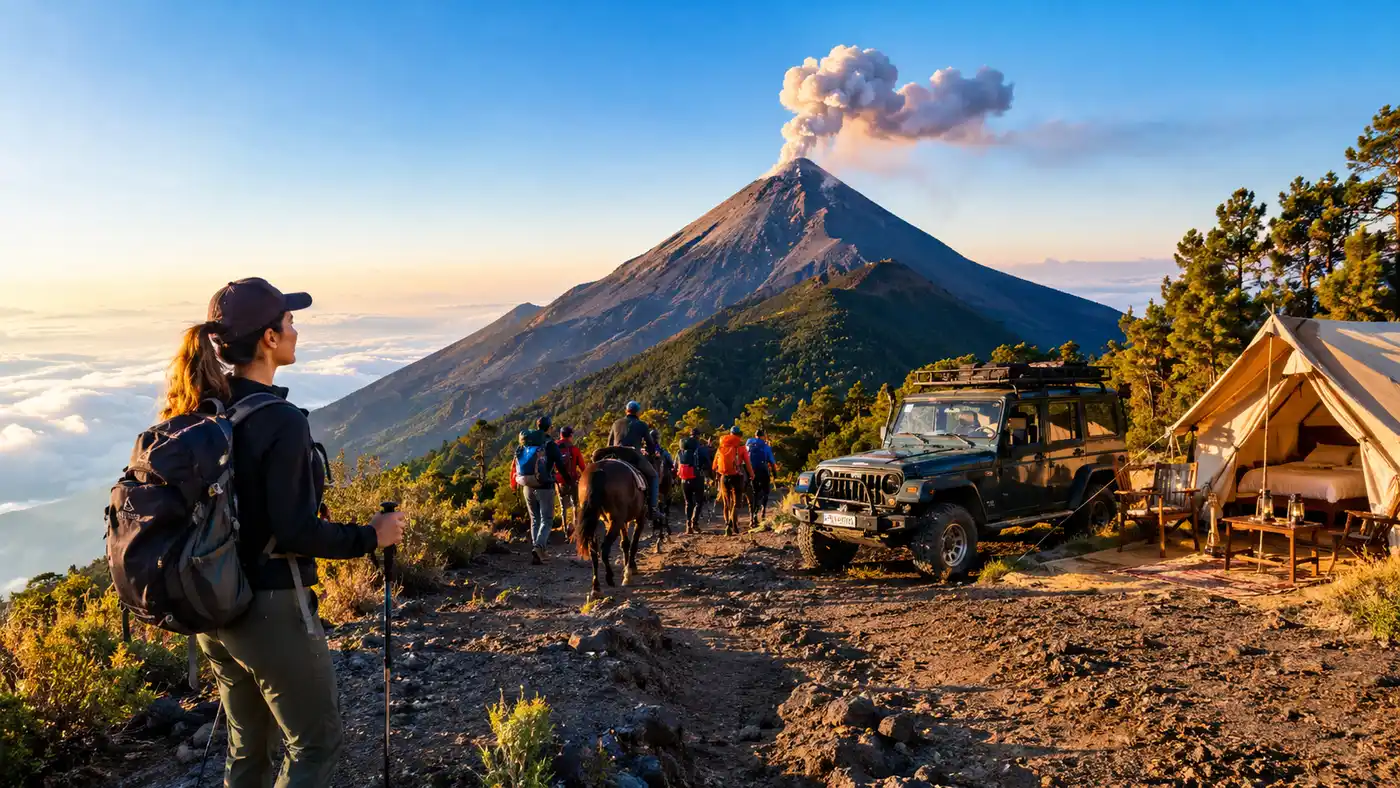
Hiking Acatenango with Extras Jeep Horse Glamping
Walking into La Soledad at six in the morning feels like stepping into a cold mist factory. Most people arrive with bulging 50-liter rucksacks, staring upward through the fog toward the double peaks while trying to ignore the burn already starting in their calves. If the idea of grinding through loose scree for six hours sounds awful, exploring acatenango horseback options or booking a 4x4 shuttle can change the entire equation. My first time up, I carried 35 pounds of camera gear and dry beans. My knees screamed for three days straight afterwards.
You do not have to suffer through every vertical inch of this volcano to watch Fuego spit incandescent rock into the night sky. Over the past few seasons, local cooperatives and guiding outfits expanded their upgrades beyond simple pack mules, adding rugged 4x4 tracks and heated A-frame shelters. Whether you want to save your knees on the trail or sleep in a real bed at 12,000 feet, these add-ons turn an exhausting slog into something you might actually enjoy.
Book your acatenango volcano hike experience:
The Reality of Tackling Acatenango Horseback
Hiring an acatenango horse is not an admission of defeat. The first third of the mountain is notorious among hikers for being a morale killer. You step into fine volcanic dust mixed with agricultural runoff, taking one step forward and sliding halfway back down. Local handlers, known as arrieros, wait near the village trailhead with small, sure-footed mountain horses. These animals are remarkably calm, accustomed to the steep grades and shifting dirt that leave human hikers gasping for air.
Riding uphill takes genuine physical work. You cannot just sit back like you are lounging on a sofa. Your core stays tight to match the horse's gait, your inner thighs work constantly, and you lean forward over the saddle horn to help the animal balance on steep switchbacks. By the second hour, my hip flexors felt tight in ways regular hiking never triggered. Still, your lungs stay relatively clear, which is a massive win when the air starts thinning above 9,000 feet.
Ethical treatment matters here. The community around San Jose Calderas and La Soledad runs a rotation system to prevent individual animals from being overworked. Handlers walk alongside you the entire time, holding lead ropes on tricky sections and watching the footing carefully. If a horse shows signs of fatigue, the handler stops immediately to rest the animal. Weight limits are enforced strictly. Most outfits cap riders at 180 pounds, though some allow up to 200 pounds depending on the build of the mount. If you weigh more than that, do not try to push the issue with the arriero. Book a porter or look into the vehicle options instead.
Note: Horses cannot climb all the way to the crater rim or the highest volcanic ridges. You will dismount roughly 45 minutes below high camp, meaning you must still walk into camp and tackle the final 3,976-meter sunrise summit on foot.
How the Acatenango Horse Route Actually Works
The standard hiking path and the dedicated horse route diverge about twenty minutes past the registration hut. While foot traffic heads straight up the dusty trench through the cornfields, horses take a wider trail cut into the shoulder of the ridge. This track has slightly gentler switchbacks, designed to give the animals better purchase on the volcanic clay. You bypass the worst of the deep sand near the bottom, weaving through high-altitude farmland before entering the cloud forest.
Riding through the cloud forest is strangely peaceful. Massive cypress trees hang with Spanish moss, and the trail softens under layers of fallen pine needles. You move at roughly double the speed of an average walking group. Hikers who left the trailhead thirty minutes ahead of you step aside into the ferns to let you pass, usually staring at your stirrups with undisguised envy. It takes about three hours on horseback to cover the distance that takes backpackers five or six hours of heavy breathing.
The terrain becomes technical once you break out of the tree line. At around 11,000 feet, the dirt gives way to loose grey scree, and the path narrows dramatically along the mountainside. This is where the ride ends. The handlers tie the horses to sturdy wooden posts near an alpine clearing, hand you your daypack, and head back down the mountain. From this drop-off point, you take over. The remaining trek into base camp demands real footwork, so having a good sense of the difficulty distance elevation gain on Acatenango helps keep your expectations grounded before you dismount.
Taking an Acatenango Jeep up the Lower Slopes
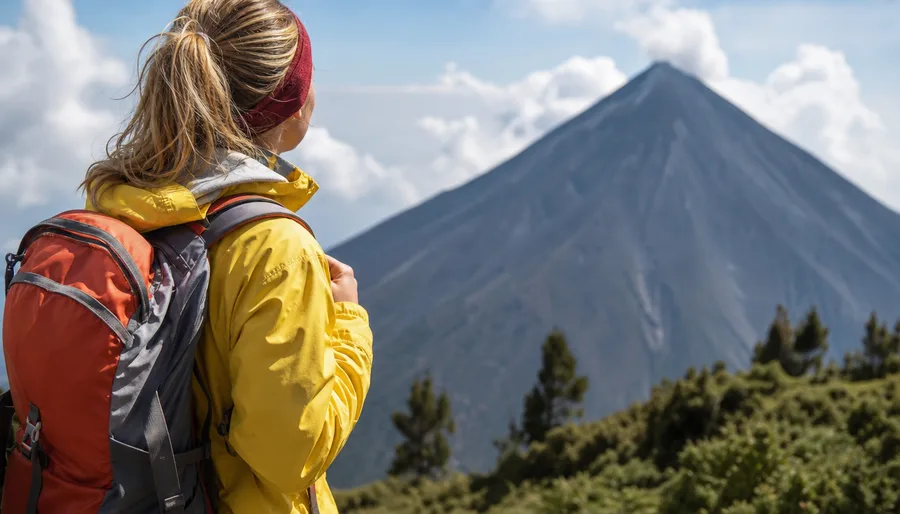
If horses are not your thing, an acatenango jeep shuttle offers another way to skip the brutal bottom stretch. Several local outfits operate modified Toyota Hilux pickups and older Land Cruisers fitted with heavy suspension systems. These trucks rumble up rough agricultural roads carved into the volcano's northern flank, grinding through deep ruts and loose basalt that would destroy a standard passenger vehicle.
The ride is rough. You bounce around the cabin or hold tight to roll bars in the back bed, ducking under low-hanging avocado branches and clutching your daypack between your knees. It took us about 47 minutes to reach the end of the drivable road. That single bouncy drive erased nearly 2,000 feet of vertical ascent and spared our legs the dustiest, least scenic part of the entire mountain.
Pro tip: Sit behind the cab if you ride in an open truck bed, because the fine volcanic silt thrown by the back tires will coat your jacket, teeth, and camera gear within five minutes.
From the vehicle drop-off point, you shoulder your pack and join the trail right near the transition into the sub-alpine forest. You still hike for about three hours to reach high camp, but your legs feel fresh. You have plenty of energy left for the optional sunset side trip toward Fuego's smoking ridge, which many standard hikers skip simply because they are too exhausted to move another step.
Book your acatenango volcano hike experience:
Glamping Domes and Cabins at High Camp
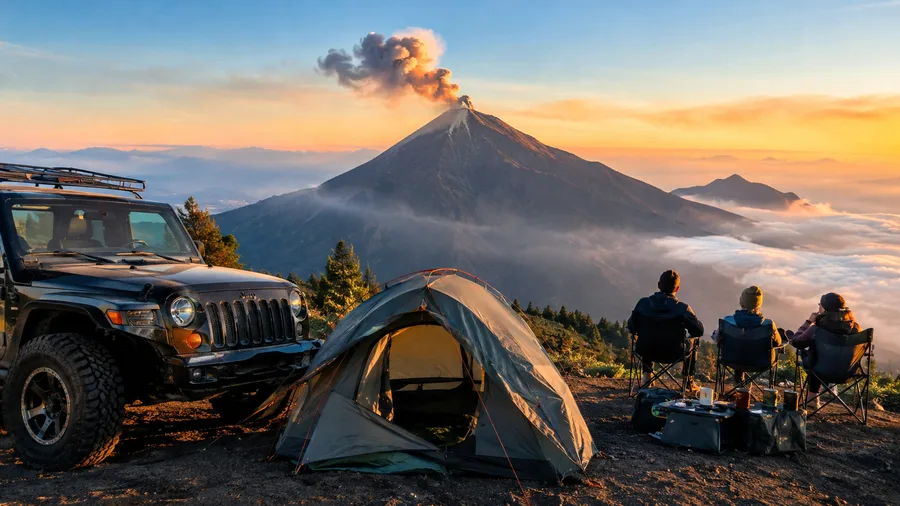
Base camp on Acatenango used to mean one thing: shivering inside a worn tent pitched on uneven volcanic rock, listening to the wind rattle the nylon all night. Today, the ridge facing Volcan de Fuego looks completely different. Several operators have built semi-permanent glamping setups that turn an otherwise freezing bivouac into an extraordinarily comfortable mountain refuge.
The best camps feature wooden A-frame cabins or geodesic domes built on leveled platforms. Instead of a paper-thin foam mat on frozen ground, you get an elevated wooden bed frame, a thick foam mattress, and three or four heavy wool blankets made in Momostenango. Some high-end domes even feature cast-iron wood stoves that burn aromatic pine logs, keeping the interior warm long after temperatures outside drop below freezing. If you prefer full comfort with your volcanic views, you can read more about private VIP luxury options on the Acatenango hike to see how far operators have pushed these amenities.
Sitting on a private wooden deck with a mug of hot chocolate while Fuego roars directly across the valley is unforgettable. The shockwaves hit your chest like deep bass notes at a concert, vibrating right through the timber floorboards. When the eruption subsides, you step straight through a canvas door into a warm bed instead of crawling through frozen gravel into a damp sleeping bag.
Booking an Acatenango Horse Tour or Vehicle Upgrade: Costs and Logistics
Arranging these upgrades requires advance planning, especially between November and April when peak dry season hits Antigua. While you can sometimes negotiate with an arriero at the trailhead on the morning of your hike, availability is never guaranteed. If three tour buses arrive before you, every working animal on the mountain might already be booked for luggage or other hikers.
Prices vary depending on whether you arrange the service through an agency in Antigua or hire directly at La Soledad. Direct booking saves cash, but agency bookings usually include your park fees, bilingual guides, and transport from your hotel. Expect to pay in cash if you hire locally on the mountain. Guatemalan Quetzales are mandatory; nobody at the trailhead accepts credit cards or foreign currency.
| Trek Style | Average Extra Cost (USD) | Elevation Saved | Hike Time to Camp | Physical Strain Level |
|---|---|---|---|---|
| Standard Foot Trek | $0 | 0 feet | 5 to 7 hours | Very High |
| Pack Horse (Bags Only) | $35 to $45 | 0 feet (reduces weight) | 5 to 6 hours | Moderate to High |
| Horseback Ride Up | $90 to $120 | Approx. 3,200 feet | 3.5 to 4 hours | Moderate |
| 4x4 Jeep Shuttle | $65 to $95 | Approx. 2,100 feet | 3 to 4 hours | Moderate |
| Full Glamping Dome | $130 to $220 | 0 feet (lodging only) | Depends on transport | Low (at camp) |
Choosing your upgrade package comes down to where you want your comfort. Some people love the physical grind of the ascent but crave a warm, comfortable bed at night. Others want the open-air adventure of riding an acatenango horse up the lower switchbacks while sleeping in a standard tent to keep costs down.
- Weight restrictions: confirm your body weight with the company prior to booking an acatenango horse tour, as scales are often used at the base.
- Downhill travel: horses are almost never used for the descent because steep downhill riding on loose scree puts dangerous pressure on horse joints.
- Cash reserves: carry at least 400 extra Quetzales in small denominations to tip handlers and drivers directly.
- Weather backups: torrential rain can wash out the 4x4 tracks, forcing vehicle tours onto the main trail on foot without much warning.
Packing for an upgraded trek is slightly different than packing for an unsupported backpacking trip. You do not need to drag a massive expedition pack up the mountain if a vehicle or pack mule carries your overnight gear. A compact 20-liter daypack holding your water, camera, rain jacket, and warm gloves is all you need during the ride or drive.
- Sturdy riding pants: avoid thin running tights that tear against trail brush and cause chafing against leather saddles.
- Buff or bandana: essential protection against the suffocating clouds of volcanic dust kicked up by jeeps and hooves.
- Closed hiking boots: stirrups on local saddles are metal and simple, requiring stiff soles to prevent foot cramps.
- Headlamp with spare batteries: camp setups have limited solar lighting, and your final summit climb still happens in pitch darkness.
Frequently Asked Questions about acatenango horseback
Can complete beginners do the acatenango horseback trek?
Yes. The horses are extremely calm and follow their handlers closely on a lead rope throughout the ascent. You do not need previous riding experience, though basic physical fitness helps because balancing on steep terrain engages your core and leg muscles constantly.
Can I ride an acatenango horse back down the volcano?
Almost never. Going downhill on loose volcanic ash is treacherous for horses carrying adult riders, creating a high risk of slips and leg injuries for the animals. You will walk down the mountain the next morning, which takes about two to three hours.
Does an acatenango jeep take you all the way to base camp?
No vehicle can reach base camp or the summit. The road ends near the edge of the cloud forest at roughly 9,800 feet. From that drop-off point, every traveler must hike on foot for approximately three hours to reach the overnight camps facing Fuego.
How far in advance should I book glamping and horse extras?
Book at least two to four weeks ahead if you plan to visit between December and March. Glamping domes and working horses are strictly limited in number, and high-season weekends often sell out over a month in advance.
Quick Reference
- Ride saves about 3,200 feet of climbing
- Horse service stops below high camp
- Descents are completed entirely on foot
- Rider weight capped strictly at 180-200 lbs
- Jeep cuts 45 minutes of steep farm track
Book your acatenango volcano hike experience:
My Take
Purists will always tell you that using an assist ruins the spirit of the mountain. I used to think the same thing until I watched an older couple celebrate their anniversary inside a glass dome at base camp, drinking hot tea while watching lava fountains light up the cloud deck. They never could have made that climb on foot with a heavy pack. Extras like horses, rugged jeeps, and heated cabins take nothing away from the raw power of Fuego. They simply open up one of the world's great natural spectacles to people who prefer wonder over sheer exhaustion. If an upgrade keeps you safe and smiling on the trail, book it and do not look back.
Read more about acatenango volcano hike.