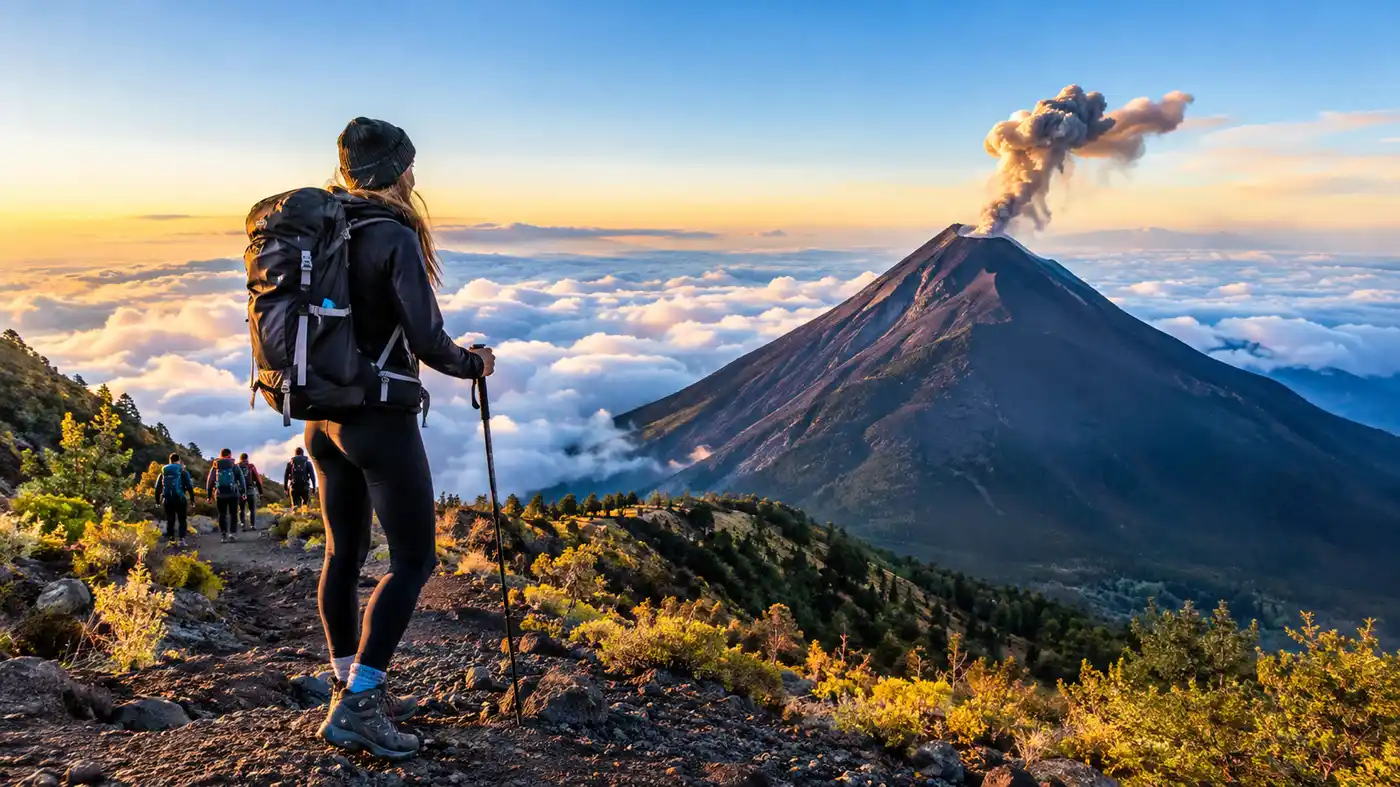
Gear Clothing for Acatenango Volcano Hike
Antigua sits at a balmy 1,500 meters, so wandering around Parque Central in a lightweight linen shirt easily tricks your brain into believing Guatemala stays warm forever. Ten hours later, you might be standing on a volcanic ridge at almost 4,000 meters while a freezing gale screams across the saddle and the black dirt under your boots turns hard as rock. Sorting out your gear clothing for acatenango volcano hike early is the absolute dividing line between marveling at Fuego shooting molten rock into the night sky and spending twelve miserable hours shivering inside a damp sleeping bag.
Packing for this trek confuses a lot of people. You start walking through dusty, sun-baked cornfields, grind uphill through a damp cloud forest, and finally reach a stark alpine ridge where the thermometer routinely plunges below freezing. You need an outfit that breathes while you sweat under a heavy pack, paired with heavy thermal layers that keep you warm when you stop moving. I learned this the hard way on my first ascent when I brought cotton sweatpants that soaked up mist like a sponge. Let us look at what genuinely works on this mountain, what you can leave behind, and what you can rent cheaply before setting off.
Book your acatenango volcano hike experience:
The Climate Shift: Understanding the Trail Conditions
The climb breaks down into four distinct zones, each demanding something different from your wardrobe. The first ninety minutes wind through steep agricultural land where the sun beats down on your neck and loose volcanic soil kicks up around your ankles. You will sweat profusely here. Wearing heavy trousers or a jacket during this stage is a huge mistake because your clothes will be drenched before you even reach the park entrance.
Soon enough, the trail enters the cloud forest. The air cools down, but the humidity climbs toward one hundred percent. Moss hangs from the oak branches and mist clings to your skin. If your base layer holds onto water, that trapped moisture will chill your core the moment you take a rest break on an old log bench.
Pro tip: Pack every single piece of clothing inside heavy-duty trash bags or a dry sack inside your backpack, because cloud forest mist will easily seep through standard daypack fabric.
Above tree line, everything changes abruptly. The canopy vanishes, replaced by high alpine pine and exposed scree slopes. The wind picks up immediately. By the time you reach base camp around 3,600 meters, the ambient temperature drops fast, often hovering around 2 to 4 degrees Celsius at dusk and dropping below zero after midnight. If you tackle the midnight or sunrise push to the crater rim, wind chill can drag perceived temperatures down to minus seven. You need a modular system where every garment layers over the next without cutting off your circulation.
Base and Mid Layers: What to Pack for Acatenango
Leave every stitch of cotton at your hostel in town. Cotton holds moisture, takes forever to dry in cold air, and robs your body heat rapidly. Synthetic polyester or merino wool is the only sensible way forward.
Your base layer needs to breathe while you climb. A lightweight merino wool long-sleeve top or a synthetic running shirt paired with sturdy hiking shorts or stretchy trekking pants works best for the lower miles. Some hikers wear shorts for the sweaty lower farmland, then slip lightweight rain pants or trekking pants over them once the air chills in the upper forest. That saves you from having to strip down behind a bush on a steep switchback.
- Moisture-wicking base top: A 150 to 200 gsm merino or synthetic shirt that handles sweat without turning icy against your skin.
- Hiking trousers: Nylon or ripstop trail pants with some stretch, ideally treated with water-repellent coating.
- Fleece mid-layer: A 100 or 200 weight grid fleece jacket that traps warm air while letting vapor escape during steep walking.
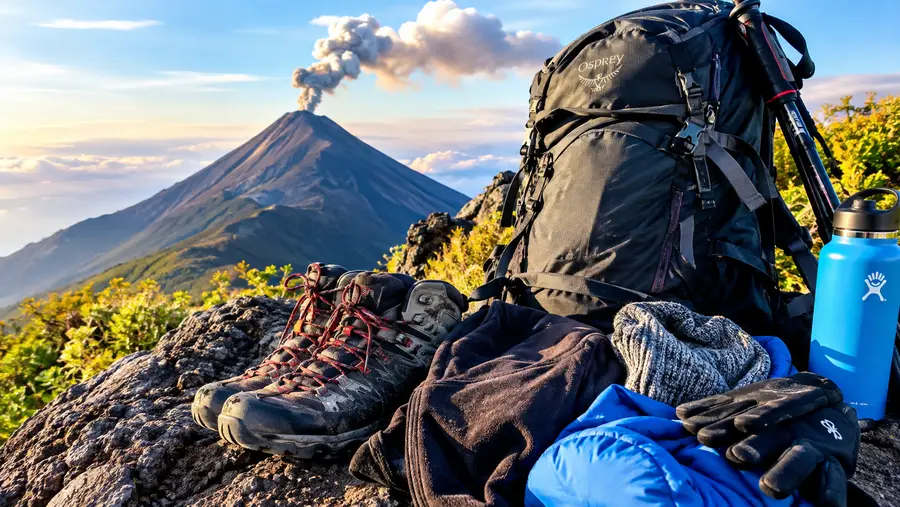
- Synthetic or down insulated jacket: A puffy jacket rated down to freezing, packed tightly at the top of your ruck where you can grab it the second you stop.
- Breathable rain shell: A windproof and waterproof outer layer with pit zips to deflect misty drizzle and block ridge winds.
Your mid-layer sits between your skin shirt and your outer jacket. A decent grid fleece works wonders because it weighs very little, squashes down into an awkward corner of your rucksack, and remains warm even if it gets slightly damp from your back sweat. Many trekkers make the mistake of pulling out their biggest winter jacket during short hiking breaks. That just makes them sweat again. Stick to putting your fleece on during five-minute pauses, and save the puffy down jacket for the moment your group actually reaches base camp.
Freezing Nights at Base Camp: What Should I Pack for the Acatenango Overnight Hike
Once you drop your pack at camp, your body temperature plummets within fifteen minutes. The sweat on your back cools down, the wind whips across the ridge from the valley below, and the sunset pulls every remaining bit of heat from the dirt. This is the moment to change out of your damp climbing clothes immediately. Do not wait until dinner. Peel off that sweaty base shirt inside the tent, wipe your skin dry with a small camp towel, and put on bone-dry camp layers.
Many travelers wonder what should i pack for the acatenango overnight hike specifically for sleeping. The answer comes down to dry thermals and clean wool socks. Bring a dedicated set of midweight thermal bottoms and a clean long-sleeve thermal top that stays inside a waterproof bag all day long. These garments should never see the trail; they exist solely for sleeping and sitting around the campfire with a mug of hot chocolate.
Note: Most budget tour agencies supply sleeping bags rated for mild conditions rather than true alpine freezes, so wearing your down jacket and beanie inside your sleeping bag is often necessary to stay comfortable.
Your extremities feel the cold first. Thin summer gloves from a local market will not cut it when you are gripping cold trekking poles at 4 a.m. on the summit trail. Bring windproof outer gloves or mittens, plus a pair of thin liner gloves underneath. A thick wool beanie that pulls down over your ears and a neck gaiter or buff will protect your face from the stinging dust blown up by Fuego's eruptions. Without a buff, you will spend the next three days coughing up black volcanic grit.
Book your acatenango volcano hike experience:
Footwear, Hardware, and Pack Strategy: What to Pack for Acatenango Hike
Footwear causes more debates than anything else on this trek. Some people swear by sturdy, high-cut leather boots, while others walk up in trail running shoes. Both can work, but standard road running sneakers with smooth soles are an absolute disaster. The last section below the crater and the descent through the sand dunes require aggressive tread. Deep lugs keep you from sliding backward with every upward step on loose scree.
If you wear low-cut trail runners, consider bringing short trail gaiters. Otherwise, tiny pebbles of volcanic cinder will work their way under your heel every twenty steps, forcing you to stop and unlace your shoes on 35-degree slopes. Pair your shoes with two pairs of cushioned merino wool socks. Wool cushions your toes during the punishing descent, where your feet smash against the front of your footwear for three solid hours. You can read more about avoiding sore feet and stamina issues in our breakdown of common mistakes hikers make on these steep Central American volcanoes.
| Gear Item | Ideal Weight / Spec | Primary Function | Rent in Antigua? |
|---|---|---|---|
| Down Puffy Jacket | 350 - 500 grams (650+ fill) | Camp warmth and sunrise crater climb | Yes (around 35 - 50 GTQ) |
| Trekking Poles | Aluminum pair with flick-locks | Knee relief and scree traction | Yes (around 25 - 40 GTQ) |
| Headlamp | 150 - 300 lumens with fresh batteries | Night navigation to summit | Yes, but buying one is better |
| Hard Shell Rain Jacket | 2.5 or 3-layer breathable membrane | Windbreak on ridge and rain shield | Yes (around 30 - 40 GTQ) |
| Trekking Backpack | 45 to 60 liters with hip belt | Hauling 4L water, layers, and gear | Usually provided by tour company |
Hardware makes an enormous difference to your daily comfort. A solid headlamp is non-negotiable. Using a mobile phone flashlight while scrambling over loose volcanic gravel in the dark is dangerous and drains your battery when the cold is already killing phone life. Bring extra batteries, because freezing temperatures cause lithium and alkaline cells to lose voltage rapidly.
- Sturdy trekking poles: These cut the impact on your knees in half coming down and give you an extra push uphill through loose scree.
- A 200+ lumen headlamp: Crucial for the 4 a.m. scramble to the summit when your hands need to stay free.
- Portable power bank: Cold air drains electronics fast, so keep your phone and camera batteries in an inside pocket close to your chest.
- UV sunglasses: High-altitude glare off volcanic gravel and cloud decks will strain your eyes without decent eye protection.
Renting Gear in Antigua vs Bringing Your Own
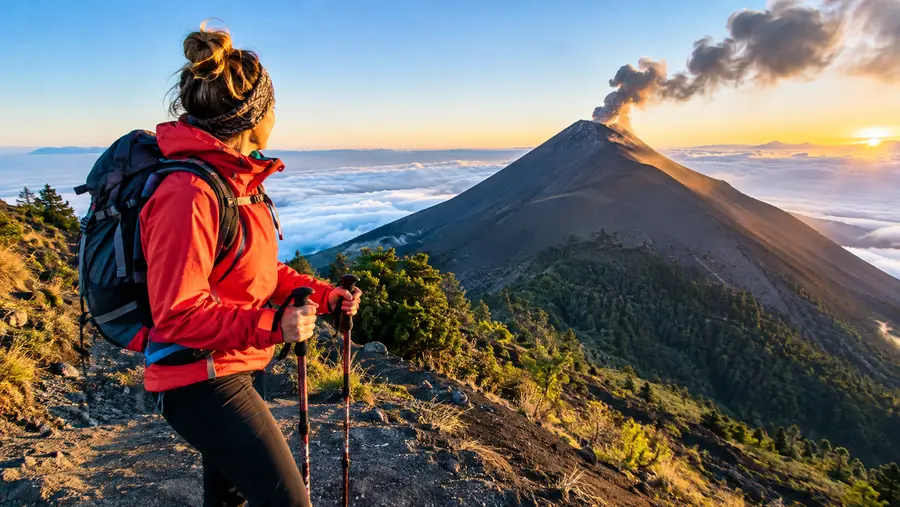
You do not need to fly down to Central America with a 65-liter backpack stuffed with mountaineering equipment. Antigua has an active outdoor rental community. Tour agencies and small rental outfits along 6th and 7th Calle offer decent cold-weather kits for small daily fees. A puffy jacket usually costs around 35 to 50 Quetzales, which is roughly five to seven dollars. Warm gloves, beanies, and rain jackets sit in similar price brackets.
With rental gear, quality varies wildly. Zipper teeth get ripped out, synthetic fill clumps up from commercial washing machines, and rain jackets often lose their water repellency over months of heavy use. If you rent in town, check the seams, test every zipper twice, and make sure the jacket actually fits over the fleece you plan to wear beneath it. Do not accept a damp jacket from an agency shelf on the morning of departure.
If you are trying to decide whether to do a day hike or an overnight trek, packing requirements shift dramatically. Day hikers can ditch the heavy sleeping thermals and camp puffers, carrying only a windbreaker, fleece, water, and lunch in a compact 20-liter pack. Overnight hikers must commit to carrying far more bulk, including at least four liters of water, because there are no natural water sources anywhere on the upper reaches of Acatenango.
My advice is simple. Bring your own broken-in footwear, your trusted socks, and your own next-to-skin thermals from home. Rent the bulky exterior items in Antigua, like the heavy insulated coat and the trekking poles. That keeps your travel luggage light while ensuring the clothes touching your bare skin fit comfortably and stay dry.
Frequently Asked Questions about gear clothing for acatenango volcano hike
How cold does it actually get at base camp?
Temperatures at base camp usually sit between zero and 5 degrees Celsius overnight, but wind gusts off the saddle can easily push wind chills below freezing. On the summit at sunrise, expect sub-zero conditions with bitter mountain winds.
Can I hike Acatenango in standard running sneakers?
Standard running shoes lack the deep rubber lugs needed to grip loose volcanic dust and gravel. You can physically make it up, but you will slip constantly on the steep trails and fill your shoes with sharp stones. Trail running shoes or hiking boots work much better.
Do I need to carry my own winter sleeping bag?
Most tour companies provide sleeping bags, sleeping pads, and tents at their established base camps. Check with your specific guide service beforehand so you do not carry unnecessary gear up a four-thousand-meter mountain.
How much water do I need to pack inside my bag?
Most hikers need roughly four liters of water. Two liters go toward keeping yourself hydrated during the steep climb, one liter is often donated to the guides for cooking your evening meal and morning coffee, and the rest is for the hike down.
Quick Reference
- Elevation at summit: 3,976 meters
- Base camp night temperature: -2°C to 5°C
- Water requirement: 4 to 4.5 liters per hiker
- Footwear needed: lugged trail runners or hiking boots
- Key clothing rule: zero cotton, strictly modular layers
Book your acatenango volcano hike experience:
Before You Go
Acatenango asks a lot from your legs and lungs, but standing above the cloud ceiling while Fuego shakes the earth beneath your boots makes every grueling step worth the effort. Do not let cold feet or a soaked shirt ruin an adventure you will talk about for the rest of your life. Pack light, pack dry, test your gear before you leave Antigua, and keep your warmest layers protected from the mist until you reach camp.
Read more about acatenango volcano hike.