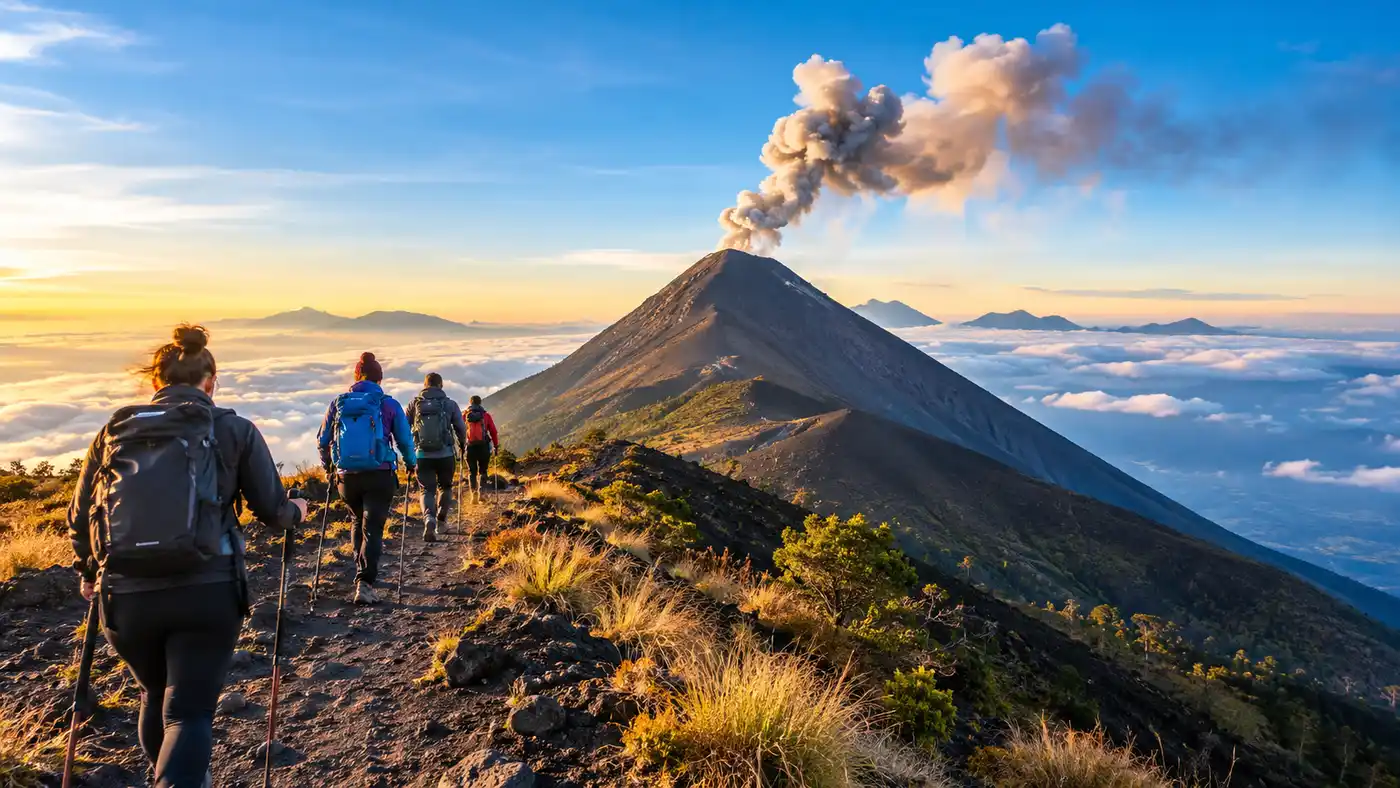
FAQ Everything You Need to Know About Acatenango Volcano Hike
Your calves will burn before you even clear the farmland. Black volcanic dust gets into your teeth, your socks, and the charging port of your phone within the first two hours. Nobody really warns you about the dust. You see the photos of red lava splashing against a violet sunset on Instagram, and you buy a ticket to Guatemala thinking it is just a stiff walk. It is not a walk. It is a grueling, six-hour crawl up loose scree that feels like stepping on dry sand dunes tilted at forty degrees.
Standing on the saddle at dusk while Volcán de Fuego roars across the valley makes every painful step vanish from your memory. The ground shakes beneath your boots. When planning this trip, you quickly realize how much conflicting advice is floating around out there. If you are digging through an honest faq everything you need to know about acatenango volcano hike, this guide strips away the romantic travel brochures to give you the raw reality of the trail, the cold, the gear, and the logistics.
Book your acatenango volcano hike experience:
The Trail Reality: Elevation, Difficulty, and Mileage
You start at roughly 2,400 meters above sea level in the village of La Soledad. The trail ends at the summit at 3,976 meters. That means you are gaining around 1,500 vertical meters over just eight kilometers of walking. The math sounds simple enough until you factor in the thin air and the surface underfoot. For the first ninety minutes, you hike through cornfields on a path cut deep into the hillside. The dirt is powdery. For every two steps forward, your boot slides back half a step.
The trail winds through four completely distinct ecosystems. You leave the dusty cornfields behind and enter a lush cloud forest draped in Spanish moss and damp ferns. It is quiet here. The air cools down fast, which feels wonderful until your sweat-soaked shirt starts clinging to your back. After the cloud forest, the trees thin out into high alpine pine woods, where the wind begins to pick up. Finally, near base camp, you reach the volcanic wasteland. The trees disappear entirely, replaced by jagged black rock, loose gravel, and grey ash swept by icy winds.
Most groups take between five and seven hours to reach base camp. If you run marathons, you might do it in four. If you live at sea level and spent the last week drinking cocktails in Antigua, expect seven hours of heavy breathing. The guides keep a steady pace, usually stopping for five minutes every half hour to let stragglers catch up. Do not let your ego push you to the front of the pack early on. The hikers who sprint out of La Soledad are almost always the ones vomiting on the side of the trail by hour three.
Pro tip: Rent two wooden trekking poles from the local kids at the trailhead for five Quetzales each. They look like simple tree branches, but they will save your knees on the descent.
Choosing a Guide and Comparing Tour Operators
You cannot hike Acatenango without a registered local guide anymore. Park rangers check permits at the entrance booth, and going alone is dangerous due to sudden weather shifts. Antigua is packed with dozens of tour agencies offering trips, ranging from dirt-cheap hostel shuttles to luxury setups with heated domes. Price usually reflects three things: the quality of the warm clothes they rent you, the food you eat on the mountain, and whether your sleeping bag was washed this week.
Budget agencies charge around 350 to 450 Quetzales (roughly $45 to $60 USD). With these, you generally carry your own sleeping mat, your sleeping bag, and your food up the mountain. You sleep in shared tents that might let the wind whistle through the seams. Mid-range outfits charge between $80 and $115 USD. They maintain permanent wooden A-frame cabins or heavy canvas tents at base camp, meaning your shelter is already pitched and waiting for you. High-end companies push beyond $180 USD, providing thermal domes, wine, and warm burritos cooked by a dedicated camp chef.
| Tour Category | Average Cost (USD) | Shelter Type | Gear Carried by Hiker | Guide-to-Hiker Ratio |
|---|---|---|---|---|
| Budget Hostel | $45 - $60 | Basic nylon tents | Sleeping bag, mat, food, water | 1 guide per 10-12 hikers |
| Mid-Range Local | $85 - $115 | Permanent wooden cabins | Personal layers, water, snacks | 1 guide per 6-8 hikers |
| Premium Glamping | $170 - $240 | Geodesic domes with beds | Daypack only (gear portered) | 1 guide per 4-5 hikers |
If carrying a thirty-pound backpack sounds miserable, hire a local porter at the trailhead. It costs roughly 200 Quetzales ($26 USD) each way. That money goes straight to families living in the mountain villages, and it takes an immense physical toll off your knees. Honestly, there is zero shame in hiring one. The porters carry fifty pounds strapped to their foreheads with leather tumplines, walking up the slope in rubber boots faster than you can manage with carbon-fiber gear.
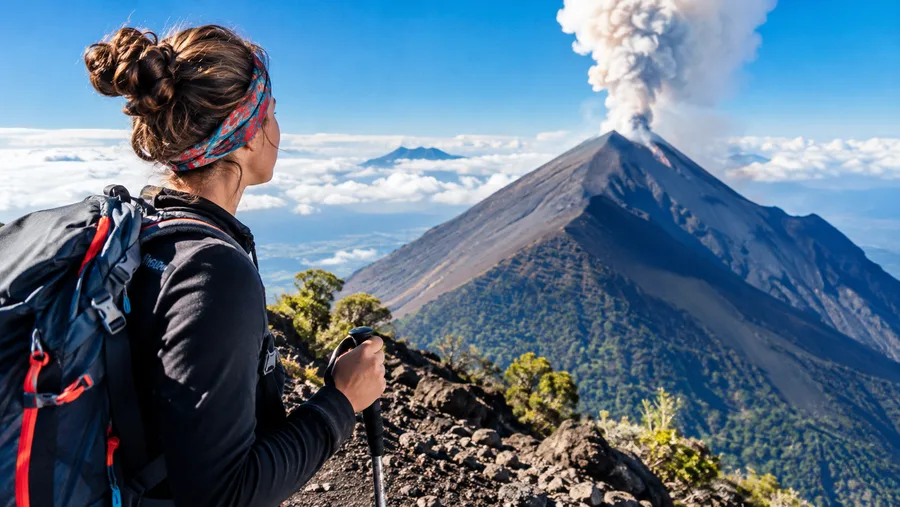
Packing Essentials for Freezing Nights
Base camp sits at roughly 3,600 meters. While Antigua can be a balmy 25 degrees Celsius during the day, the volcano summit routinely drops below freezing overnight. Wind chill easily brings the temperature down to minus five Celsius. The biggest mistake people make is packing only a fleece sweater and light joggers because Guatemala feels tropical. Check our guide on gear clothing for Acatenango volcano hike for a detailed wardrobe breakdown, but you must think in layers.
- Base layer: Merino wool or synthetic thermal leggings and a long-sleeve top to pull sweat away from your skin.
- Insulation layer: A fleece pullover topped with a packable down jacket that traps your body heat efficiently.
- Outer shell: A windproof and waterproof rain jacket to cut through the freezing gusts on the ridge.
- Head and hands: A warm beanie, a buff for the volcanic dust, and wind-resistant gloves with grip.
- Lighting: A reliable headlamp with fresh batteries because phone flashlights die in the mountain cold.
Pack four liters of water. Not three. Four. Two liters will be consumed on the way up, one liter will be used for your dehydrated meals and morning coffee, and the final liter will get you back down the mountain. Tour operators will often tell you to bring water for cooking, so listen to their brief before leaving Antigua. Bring salty snacks like salted peanuts, dried plantain chips, and chocolate bars. Sweet sports gels get sickening after five hours of heavy panting.
Note: Wet wipes are your only shower option on the mountain. There is no running water at base camp, and the pit latrines are rustic wooden huts with drop holes over the dirt.
Book your acatenango volcano hike experience:
Weather, Altitude, and Surviving Base Camp
Altitude sickness does not care about your marathon times. It hits people randomly. The pressure change triggers headaches, nausea, and poor sleep once you cross 3,000 meters. Spend at least two nights in Antigua, which sits at 1,500 meters, before attempting the hike. Drinking alcohol at the hostel bars before your climb is a terrible idea. Read our breakdown on safety altitude tips for Acatenango hike to understand the warning signs of pulmonary issues versus standard mountain fatigue.
The seasons dictate your view. Guatemala has a dry season running from November through April, and a wet season from May through October. Hiking in the wet season does not mean constant rain, but you can expect heavy afternoon downpours that turn the path into a slick mudslide. If you hike between June and September, you might spend five hours in water-repellent pants, reach base camp inside a thick cloud, and never actually see Fuego erupt through the fog.
When the sky clears, the camp experience is surreal. You sit around a small campfire eating rice and chicken while Fuego detonates every fifteen or twenty minutes across the valley. The sound travels slowly. First, you see a fountain of red basalt stones flying three hundred meters into the air. Two seconds later, a sonic boom hits your chest, sounding like a cannon firing inside a tunnel. It shakes the gravel around your camp stool. The smoke smells faintly of burnt matches.
- Hydrate early: Drink two liters of electrolyte water the day before you leave Antigua to prepare your blood volume.
- Pace your breath: Take short, rhythmic steps matched to your breathing rather than taking large lunging strides up rocks.
- Keep batteries warm: Sleep with your phone and camera batteries inside your sleeping bag to prevent the cold from draining them.
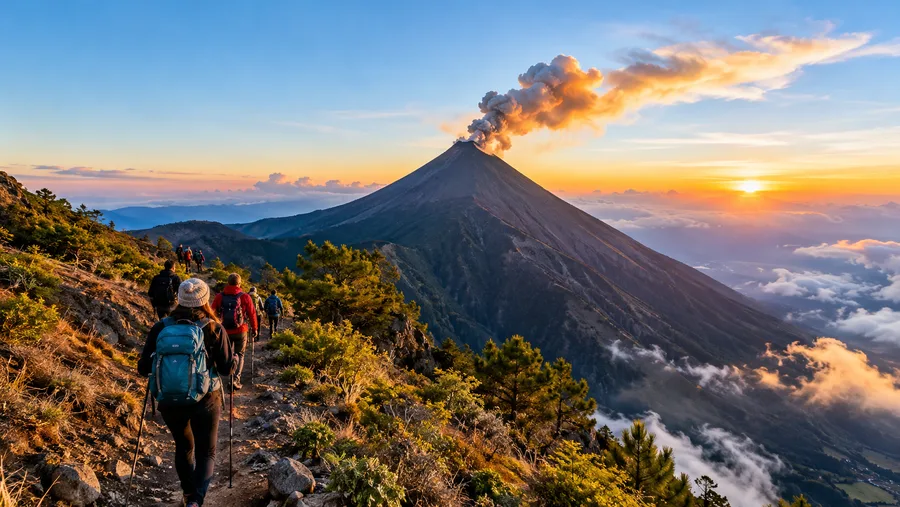
The Fuego Ridge Trek and Morning Summit Push
Once you reach base camp around 3:30 PM, your guide will ask a question that splits the group: "Who wants to hike Fuego?" This is the optional side trail. It leads you down into the saddle between the two volcanoes and up onto the narrow ridge of Volcán de Fuego itself. It costs an extra 200 Quetzales, paid directly in cash to the guides. Think carefully before saying yes.
The Fuego ridge adds another four hours of hiking in complete darkness. You descend roughly 300 meters into a ravine, then climb back up a sheer rock face to sit within a few hundred yards of an active crater. The wind on the ridge is ferocious enough to knock you off balance. You will return to Acatenango base camp around 9:00 PM, thoroughly exhausted, with your legs shaking. Is it dangerous? Yes, there is inherent risk sitting that close to an erupting vent. Is it spectacular? It is probably the most raw natural spectacle you will ever witness in your life.
If you skip the Fuego ridge trek, you get to rest by the fire, eat dinner, and crawl into your sleeping bag by 8:00 PM. You will need that sleep. The wake-up call for the Acatenango summit comes at 4:15 AM. You strap on your headlamp, leave your heavy packs in the tents, and tackle the final 400 vertical meters in the biting cold.
This final stretch is pure scree. It is the hardest part of the entire journey. You climb in pitch black, watching a line of bobbing headlamps stretch up the ridge above you like fireflies. The air is freezing and thin. Your fingers go numb inside your gloves. But when you step onto the flat summit plateau, the sun begins to rise over Lake Atitlán, casting a triangular shadow of Acatenango across the clouds below. To your south, Agua volcano rises like a solitary pyramid out of the mist.
Frequently Asked Questions about faq everything you need to know about acatenango volcano hike
Can a beginner complete the Acatenango hike?
Yes, if you have a decent baseline fitness and solid mental grit. You do not need technical climbing skills, but you must be prepared to walk uphill for six hours on uneven ground with very little oxygen.
Are there bathroom facilities on the volcano?
Only primitive pit toilets at base camp. These are wooden outhouses built over deep pits in the ground. You must bring your own toilet paper and hand sanitizer, and there are no bathrooms along the trail itself.
What shoes should I wear for the climb?
Wear broken-in hiking boots or rugged trail running shoes with deep rubber lugs. Standard running sneakers with smooth soles will slip constantly on the loose volcanic ash, causing foot blisters and ankle sprains.
Is there cellphone reception during the trek?
Surprisingly, yes. Both Claro and Tigo networks have intermittent 3G and 4G reception along the trail and at several base camps facing Antigua, though the signal drops completely in the valleys.
Quick Reference
- Total Elevation: 3,976 meters (13,044 feet)
- Distance: 13.5 km round-trip
- Trailhead Fee: 110 Quetzales park entry
- Night Temperatures: -3°C to 4°C (26°F to 39°F)
Book your acatenango volcano hike experience:
The Bottom Line
Acatenango asks a lot from your body, and the mountain does not offer shortcuts. You will spend hours wondering why you paid good money to trudge through freezing dirt with burning lungs. Then you sit on a wooden bench at dusk, hands wrapped around a dented tin cup of sweet coffee, and watch red lava tear through the twilight sky with a rumble that vibrates in your jawbone. Take the training seriously, respect the altitude, pack proper layers, and book your trek with a local crew that treats their guides fairly.
Read more about acatenango volcano hike.