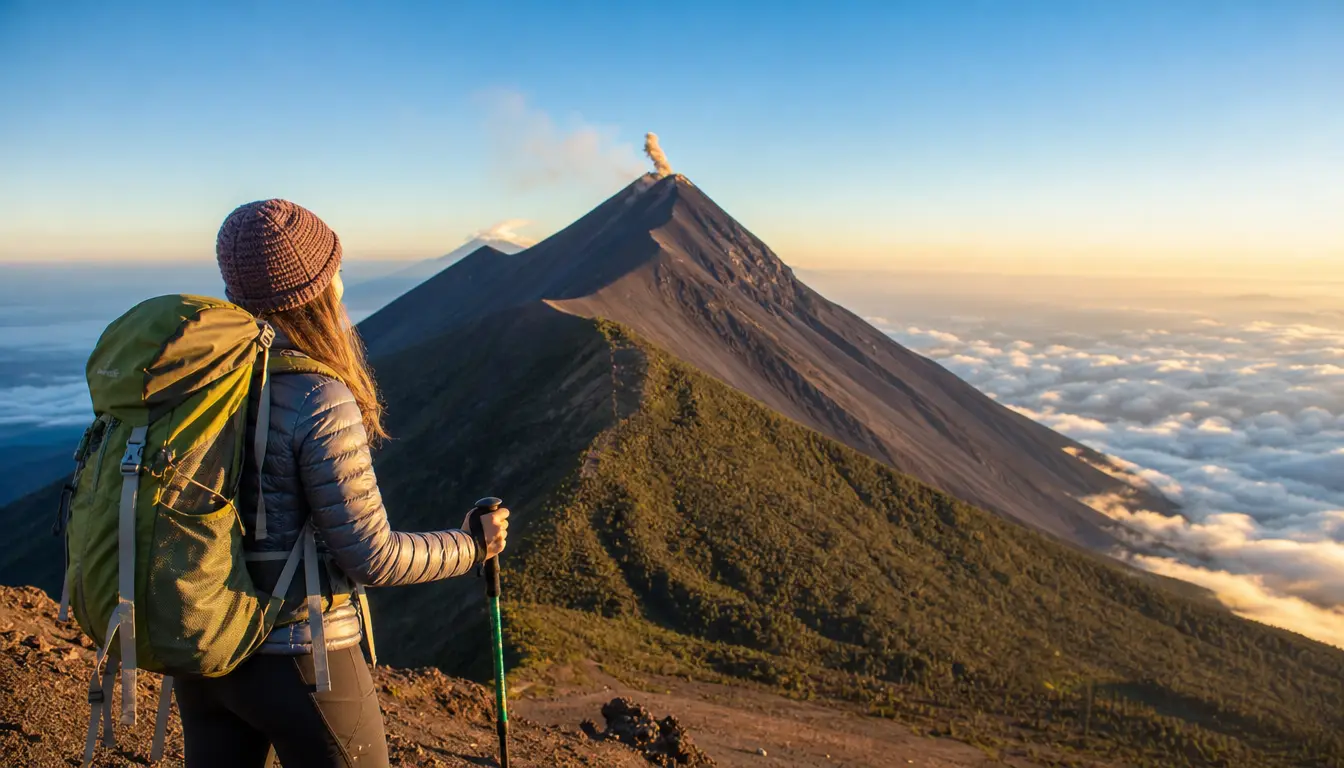
Essential Gear Checklist for Acatenango Volcano Hike
Standing in Antigua with a warm morning coffee, looking up at the jagged volcanic rim piercing the cloud line, you might easily convince yourself a light windbreaker and sneakers will do. That mistake ruins trips every single week. You are hiking from humid farmland straight into sub-freezing winds near four thousand meters, and putting together a smart acatenango packing list is the only thing standing between you and a night spent shivering miserably in a drafty wooden cabin while Volcán de Fuego spits lava across the saddle.
Every gram counts when your calves are burning on loose volcanic pumice. Most people carry a pack weighing somewhere between nine and thirteen kilos, depending on whether their tour company handles food and camp sleeping bags or leaves the heavy lifting entirely to you. You do not need to buy out an entire outdoor retailer in Antigua. You just need the right system of warm layers, decent footwear, enough water to keep your blood flowing at thin altitudes, and a few small personal items that turn an exhausting climb into an unforgettable experience.
Book your acatenango volcano hike experience:
Layering Essentials: Building Your Acatenango Packing List from Base to Summit
The temperature shift on this mountain messes with people. You start trekking around 2,400 meters in dusty farmland where the sun bakes your neck and you sweat straight through your t-shirt within twenty minutes. Six hours later, the cloud deck swallows the ridge, the sun drops behind the Pacific horizon, and base camp plummets to roughly zero degrees Celsius or below. You cannot hike in your heavy gear because wet clothes will freeze once you stop moving. Sweating through a fleece during the climb is dangerous.
Your base layer must be synthetic or merino wool. Cotton is your worst enemy on this route; once cotton gets soaked in sweat, it stays cold forever. Bring a clean, bone-dry thermal top and long bottoms sealed in a plastic freezer bag, and keep them untouched in your pack until you reach camp. The moment you drop your pack at your shelter, strip off your damp hiking shirt and pull on those dry base thermals.
On top of those dry thermals, stack an insulating mid-layer like a high-pile fleece or lightweight grid sweater, followed immediately by a packable down puffer jacket. Down gives you incredible warmth for almost no weight, which helps immensely when stuffing gear into a small daypack. Finally, top everything with a windproof and waterproof hardshell jacket. The ridge winds whipping between Acatenango and Fuego are relentless, often blowing hard enough to pull the breath right out of your lungs during the night viewings.
- Moisture-wicking base layers: Merino wool or polyester tops and bottoms, kept bone dry for sleeping.
- Insulating mid-layer: A 200-weight fleece or thick wool sweater for camp hanging.
- Packable down jacket: High-loft synthetic or 650+ fill down coat that compresses down into a tiny sack.
- Waterproof shell jacket: Breathable outer jacket that cuts freezing wind and stops sudden afternoon rains.
- Warm headwear and gloves: A snug wool beanie and wind-resistant ski gloves, because numb fingers ruin camera shots.
Pro tip: Pack every layer inside separate dry bags or heavy-duty trash compactor bags inside your pack, because mountain rainstorms in Guatemala can penetrate standard backpack covers in minutes.
Do not forget your hands and feet. Your extremities feel the drop in barometric pressure first, and blood leaves your fingers quickly when you stand around watching the lava display at 10 PM. Bring proper fleece or ski gloves, not cheap thin knit gloves bought on the street. A pair of warm wool hiking socks reserved solely for sleeping will feel like absolute luxury once you pull off your dusty trekking footwear.
Footwear and Trekking Gear for Volcanic Scree
The trail surface is brutal on weak footwear. The lower sections climb through slick soil and loose agricultural dust, while the upper hours force you through deep volcanic gravel where you take two steps up and slide back one. Hiking shoes with aggressive tread make the difference between steady progress and sheer exhaustion. Trail runners work fine if they have deep lugs, but mid-cut boots with ankle protection help keep sharp volcanic rocks from wedging beneath your ankles.
Trekking poles are non-negotiable for most hikers. You will see rental poles for about ten Quetzales at the trailhead trailhead shack, which are basically stripped bamboo sticks with wrist loops, and they actually work great if you did not bring collapsible poles. Using poles saves your knees around forty percent of the impact on the way down, when you are essentially scree-skiing down steep volcanic ash for two hours straight. Digging into the details of gear and clothing choices for Acatenango shows just how much physical strain the right equipment takes off your legs.
A pair of simple low gaiters helps more than you would think. The scree on the final push to the 3,976-meter summit is loose and fine, filling standard low-cut sneakers with abrasive gravel every fifty yards. If you do not have gaiters, wear tall hiking socks pulled over your pant cuffs to block the grit.
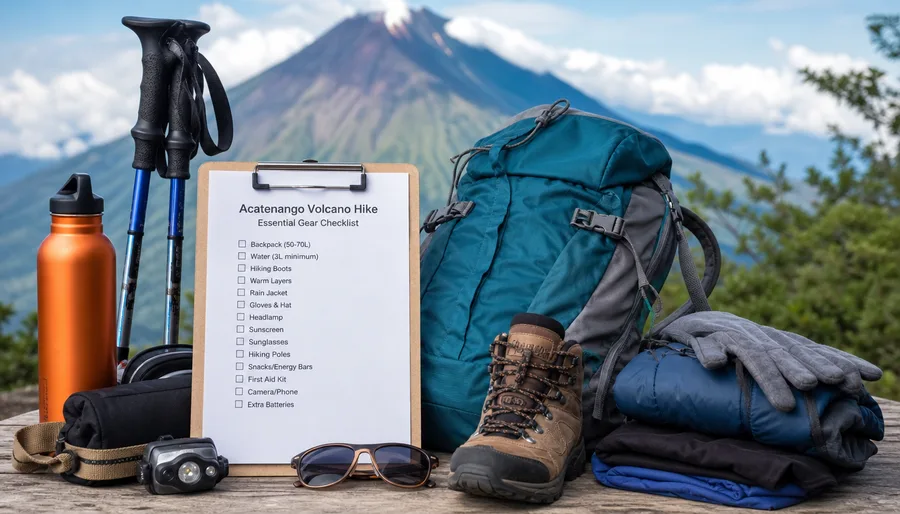
Camp Comfort and Sleep System Checklist
Most tour outfits offer a shared shelter or dome tent with foam pads and sleeping bags included. Check with your tour operator beforehand to understand the warmth rating of their gear. Many agency sleeping bags are rated for mild temperatures, which leaves hikers shivering all night long on thin foam mats. Bringing your own lightweight silk or fleece sleeping bag liner adds about five degrees of warmth and provides a clean layer against rental gear that may not get washed between back-to-back group trips.
A reliable headlamp is mandatory. You will hike the first hour of the summit push around 4:00 AM in absolute pitch darkness on narrow, uneven switchbacks. Phones do not work as flashlights here; keeping your phone out drains the cold battery fast, and you need both hands free for balance or using trekking poles. Bring a headlamp rated at least 250 lumens with a fresh set of batteries or a fully charged USB block.
Note: Freezing nighttime conditions will drain your lithium electronics rapidly, so tuck your phone, headlamp, and camera batteries deep into the bottom of your sleeping bag while you rest.
Wet wipes are a lifesaver. You will arrive at camp covered in a dark layer of grey volcanic dust mixed with sweat. There are no showers on Acatenango, and washing your face with freezing bottled water at night is miserable. A quick wipe down with two or three moist towelettes gets rid of the trail grit, prevents chafing, and lets you crawl into your sleeping bag feeling somewhat clean.
Book your acatenango volcano hike experience:
Hydration and Calorie Strategy on the Mountain
Altitude sickness strikes harder when you are dehydrated. The dry mountain air leeches moisture from your lungs with every breath, and your body works double-time pumping blood up steep inclines. You need around 4 to 5 liters of water total. Many guides ask you to carry one extra liter specifically for cooking dinner and morning oatmeal, so carry four liters for your own personal sips plus that extra cooking liter.
Drink regularly in small sips rather than chugging a whole bottle at resting spots. Mixing electrolyte powders into at least two of your water bottles replenishes the salts lost to sweat during the brutal first three hours through the farm fields. Electrolytes also stave off altitude headaches that ruin your appetite once you reach camp.
| Item Category | Recommended Weight | Pack Location | Priority Level |
|---|---|---|---|
| Thermal sleep clothing | 650g | Bottom of pack (dry bag) | Critical |
| Personal water (4 liters) | 4000g | Center pack (close to spine) | Mandatory |
| Trekking poles | 450g | In hands / outer lashings | Recommended |
| Headlamp & extra batteries | 110g | Top lid / quick access | Mandatory |
| High-calorie trail snacks | 500g | Hip belt pockets | High |
Food provided by standard tours usually covers meals, but calorie requirements skyrocket on cold climbs. Pack dense, easy snacks like salted peanuts, dried fruit, chocolate bars, and ginger chews. The ginger helps with nausea, which often creeps up above 3,500 meters. Leave bulky, crumbly snacks at home; squished energy bars are easier to chew while gasping for air on a ridge.
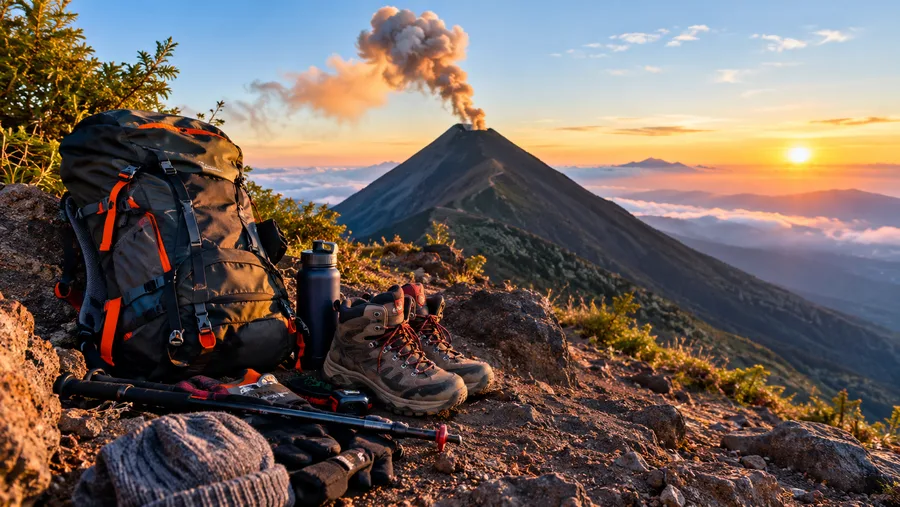
Electronics, Toiletries, and the Small Critical Items
Pack a rugged power bank holding at least 10,000 mAh. You will take hundreds of photos and videos of Fuego erupting throughout the night, and cold air murders lithium batteries fast. If you carry a mirrorless camera, bring three batteries instead of two and keep the spares tucked in an inside jacket pocket next to your body heat.
Avoid common mistakes made on the volcano by carrying small bills of Guatemalan Quetzales. You need cash for the trailhead registration fee, hot chocolate at base camp, wooden walking stick rentals, and tipping your local guides and porters. Credit cards are useless once you leave Antigua. Keep around 250 to 300 Quetzales tucked safely in a zippered pocket.
- Cash in small denominations: Bills of Q10, Q20, and Q50 for fees, stick rentals, and camp drinks.
- Broad spectrum sun protection: Strong sunscreen and polarized sunglasses, as UV rays are intense above the clouds.
- First aid kit essentials: Ibuprofen for altitude tension, blister pads, Pepto-Bismol tablets, and adhesive tape.
- Heavy duty pack cover: A fitted waterproof cover to shield gear from rain and powdery volcanic ash.
A quick roll of toilet paper and a small trowel or sealed waste bag should always sit near the top of your pack. Facilities along the trail are either primitive or nonexistent until you reach base camp outhouses. Pack out every scrap of paper and wipe you use; the mountain trails see hundreds of people weekly, and trash preservation is a serious environmental issue on Acatenango.
Frequently Asked Questions about acatenango packing list
How cold does it actually get at base camp overnight?
Temperatures regularly drop below freezing between November and March, often hovering between minus two and plus four degrees Celsius. Strong winds blowing off the ridge make it feel several degrees colder, which is why windproof shells and heavy down jackets are essential.
Can I rent warm gear in Antigua instead of packing it from home?
Yes, numerous gear shops and guiding agencies in Antigua rent out jackets, gloves, warm hats, fleece pants, and backpacks for modest daily fees. Inspect the zippers, down loft, and cleanliness before handing over cash or leaving your passport as a deposit.
Do I really need to carry four liters of water?
Yes, four liters is standard. You need about three liters to stay hydrated across the steep ascent and cold descent, plus guides typically ask for one liter of clean drinking water to prepare group soups, rice, and hot drinks at base camp.
Quick Reference
- Ideal pack weight: 9 to 12 kg
- Water minimum: 4.5 liters per hiker
- Summit elevation: 3,976 meters
- Base camp temps: -2°C to 5°C
- Trailhead cash needed: Q100 to Q150
Book your acatenango volcano hike experience:
Before You Go
Hiking Acatenango is one of the most rewarding high-altitude treks in Central America, but the mountain does not tolerate unprepared hikers. Double check your pack before leaving your hostel in Antigua, ensure your layers are completely dry, and leave the heavy non-essentials in locked storage at your hotel. Once you are standing in front of roaring red magma explosions under the stars, every ounce of smart preparation pays off tenfold.
Read more about acatenango volcano hike.