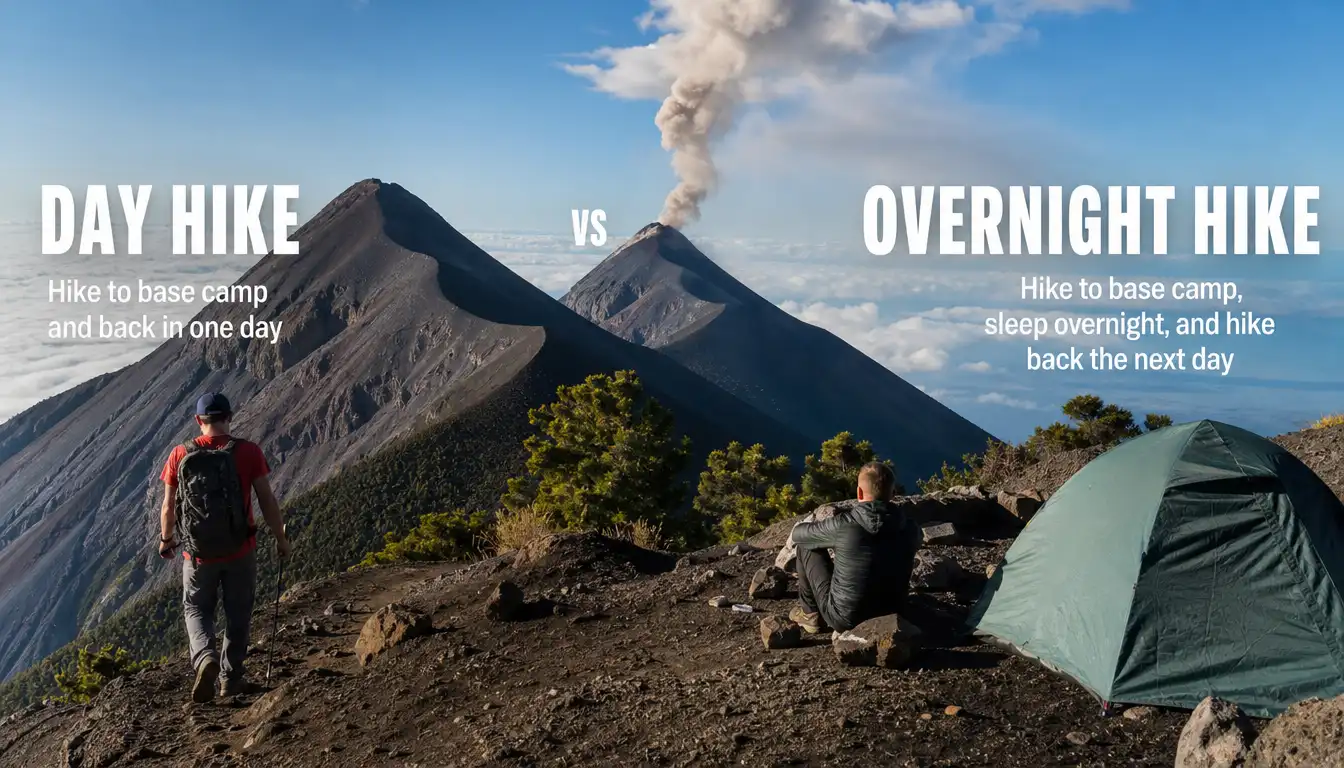
Day Hike vs Overnight Hike on Acatenango Volcano
Sitting in a cobblestone café in Antigua while listening to travelers debate the trail, you will hear the exact same dilemma every morning. Nearly everyone assumes booking an acatenango volcano overnight hike is the only genuine way to experience the giant peak, mostly because travel blogs are flooded with photos of glowing orange lava shooting into dark skies. That sight is spectacular, but sleeping on a frozen ridge at 3,600 meters after hauling gear through volcanic scree is also exhausting, loud, and genuinely uncomfortable.
Few people mention that an Acatenango day hike exists as a viable alternative. Local runners and fit backpackers knock out the entire 14-kilometer round trip between breakfast and late afternoon, skipping the frozen tents entirely. Choosing between a punishing single-day push and the classic two-day campout comes down to your physical conditioning, your timeline in Guatemala, and how badly you want to watch molten rock explode against the Milky Way.
Book your acatenango volcano hike experience:
What the Acatenango Day Hike Actually Looks Like
A day trip starts before dawn, usually around 4:30 AM when your shuttle rattles over the stones outside your Antigua hostel. You drive about 50 minutes to the dusty trailhead at La Soledad, step out into chilly air, and start walking while the sun is barely coloring the horizon. There is no gentle warm-up on this mountain. The trail starts immediately with a brutal 30-degree incline through soft agricultural fields where every two steps forward slide half a step back into loose soil.
Because you need to summit and get back down before total darkness swallows the mountain, your guide sets an unrelenting pace. You stop for five minutes every hour, drink water, chew on a dry tortilla or an energy bar, and keep climbing. The landscape shifts rapidly. You leave the cabbage patches behind, enter a quiet cloud forest dense with old cypress trees and hanging moss, and eventually emerge onto high alpine slopes covered in black pumice stone. The total ascent involves gaining nearly 1,600 vertical meters in one continuous grind.
Note: Day hikers have zero buffer for acclimatization. You ascend over 5,100 feet in roughly four hours, which drastically increases your odds of nausea or sharp altitude headaches compared to a gradual overnight schedule.
You hit the windswept summit around midday. If the weather holds, the panoramic view across the volcanic spine of the country is immense, stretching all the way to Lake Atitlan and the Pacific coast. The massive catch with a day climb is Volcan de Fuego. In the bright daylight, Fuego still detonates every 15 to 30 minutes, but you only see grey plumes of ash and hear thunderous booms. You miss the fiery red glow entirely, and by 1:00 PM thick white clouds usually sweep up from the valleys, blinding the viewpoint just as you begin the knee-destroying descent back to La Soledad.
The Reality of the Acatenango Volcano Overnight Hike
The standard overnight expedition moves at an entirely different tempo. Shuttles leave town closer to 8:30 AM, letting you finish breakfast and buy extra bananas near the market. The climb up is just as steep, but the group moves slower, taking six hours to reach the basecamps tucked into the pine line on the western ridge. Arriving at camp around 3:30 PM gives you time to peel off your sweat-soaked socks, sip hot sweet chocolate, and watch the clouds settle like a white sea beneath your feet.
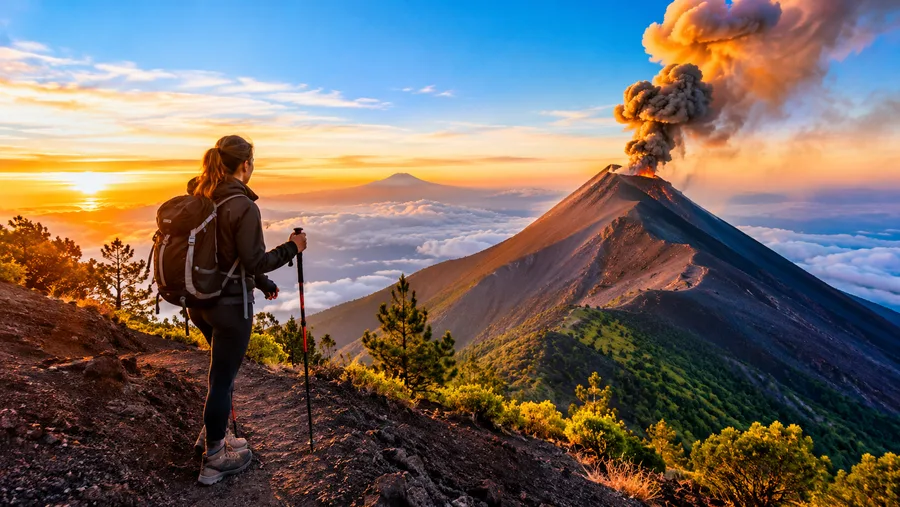
Night on the ridge is what you actually pay for. When darkness drops around 6:15 PM, the real show starts across the valley. Fuego sits only three kilometers away, growling like a jet engine before hurling car-sized boulders of incandescent magma into the night sky. The ground under your boots literally shivers. You eat a warm bowl of stew around a smoky fire, listening to the mountain roar while stars wheel overhead in freezing, thin air.
- Morning departure: groups roll out of Antigua mid-morning, reaching the trail gate around 10:00 AM after renting poles and jackets.
- Midday cloud forest: steady trekking with full packs, stopping for lunch near the halfway rest shelter around 1:00 PM.
- Camp arrival: settling into rustic cabins or A-frame tents at 3,600 meters just as afternoon mist rolls over the saddle.
- Volcano theater: standing beside the fire watching incandescent lava fountains light up the dark every twenty minutes.
- Pre-dawn summit: waking up at 4:15 AM with headlamps to scramble up the final frozen cinder cone for sunrise.
Sleep is usually mediocre at best. Wind whips against the canvas, mice occasionally rustle near the gear bags, and the volcano detonates with shocking violence through the early morning hours. Just when you drift into a deep sleep, guides bang on the wooden door frames at 4:00 AM. You pull on stiff, cold hiking boots to tackle the final 370 vertical meters of loose scree so you can stand on the 3,976-meter peak of Mount Acatenango as the sun casts a massive triangular shadow across Guatemala.
Pro tip: Pack a fresh set of thermal base layers inside a sealed waterproof dry bag so you have completely dry, warm clothes to change into the second you stop sweating at camp.
Physical Demands: How Hard Is the Volcano Hike in Guatemala?
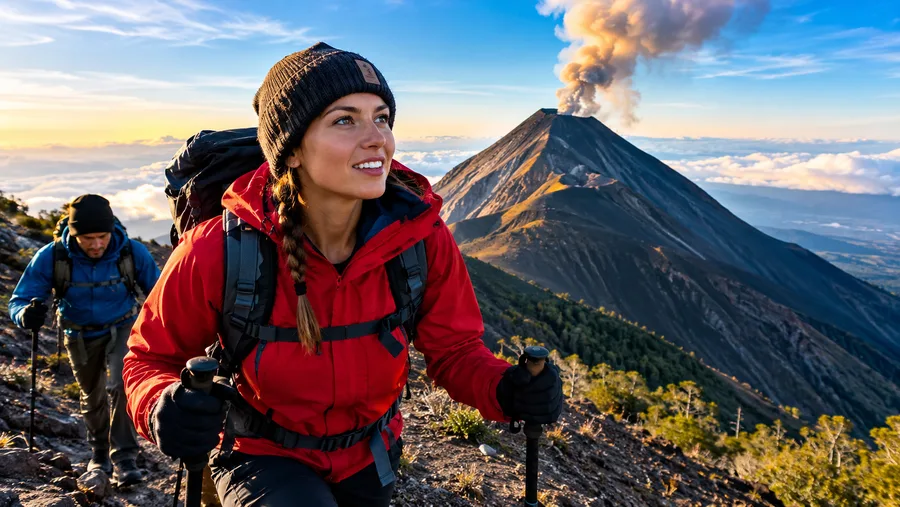
Neither option is an easy walk. People frequently underestimate this mountain because it sits so close to a tourist hub, but it ranks among the most physically punishing day treks in Central America. Understanding the exact difficulty, distance, and elevation gain on Acatenango helps put the sheer effort into perspective before you lace up your boots.
On a day hike, your lungs work substantially harder. You have to sustain an aggressive cardiovascular pace to clear the summit and return before nightfall, meaning your heart rate stays high for eight straight hours. The upside is your pack weighs almost nothing. You carry three liters of water, a rain shell, snacks, and a fleece, totaling maybe five kilograms. Coming down is brutal on older joints because dropping 1,600 meters in three hours creates intense, relentless impact on your quads and knees.
The overnight trek trades lung-busting speed for heavy muscle strain. Even if your tour operator provides pre-pitched tents and sleeping bags at basecamp, you must carry your own warm layers, four liters of drinking water, personal gear, and lunch. Walking uphill for six hours with nine to twelve kilograms on your shoulders strains your lower back and hips. Dressing properly makes a massive difference here, so review what gear and clothing for Acatenango volcano hike you actually need instead of hauling unnecessary junk up the mountain.
Book your acatenango volcano hike experience:
Head-to-Head Comparison: Day Hike vs Overnight Hike
Choosing between these two routes comes down to what kind of discomfort you prefer to handle. Do you want intense cardiovascular exhaustion wrapped up in ten hours, or a long, cold mountain overnight with unforgettable views? Here is how the key logistical factors compare directly.
| Factor | Day Hike | Overnight Hike |
|---|---|---|
| Total Trail Time | 8 to 10 hours | 28 to 30 hours total (with camp) |
| Average Pack Weight | 4 to 6 kg | 9 to 13 kg |
| Lava Eruptions Visible | Ash plumes only (daylight) | Bright red glowing magma (night) |
| Summit Sunrise Experience | No | Yes |
| Altitude Exposure | Fast ascent, quick drop | Prolonged sleep at 3,600 meters |
| Typical Cost Range | $45 to $75 USD | $65 to $145 USD |
| Physical Stress Point | Knees, lungs, aggressive tempo | Back, shoulders, freezing sleep |
Looking at the table makes the trade-offs clear. The day hike saves you from shivering through a sub-zero night in a plywood hut, but it completely robs you of the magical visual reward that made this mountain world-famous in the first place.
Costs, Logistics, and Timing: Making Your Choice
Budget travelers will find minor price differences between the options. For the standard Acatenango overnight hike price 2026 rates hover around $65 to $85 USD for basic collective tours, while private cabins or glamping setups run anywhere from $115 to $160 USD per person. A guided day hike usually costs around $50 to $70 USD because you are paying for transport, park entrance fees, and a private guide to keep your pace on schedule. Can you hike Acatenango without a guide? Technically, park rangers at the La Soledad checkpoint strictly mandate that foreigners register with an authorized guide, so attempting to solo either version is practically impossible now.
Weather plays a massive role in whether a day trip is even worth considering. The best time to hike Acatenango runs during the dry winter window from late November through April. During these dry months, mornings are crisp and clear, but clouds regularly bubble up by 1:00 PM. A day hiker who summits at noon might catch clear skies, while during the wet season from May to October, afternoon downpours guarantee that day hikers descend through soaking mud while overnight hikers wait out the rain inside camp hoping for clear evening skies.
- Choose the day hike if: you have severe time constraints in Central America, you cannot tolerate sleeping on freezing ground, your joints prefer light packs, and you have already acclimatized above 2,500 meters elsewhere.
- Choose the overnight hike if: your primary motivation is watching glowing red lava erupt against dark skies, you want to see the dawn shadow from the summit, and you want to hike the extra spur out toward Fuego ridge.
- Skip both options if: you landed in Guatemala City straight from sea level yesterday, because climbing this high without two full days in Antigua is asking for miserable altitude sickness.
Take an honest look at your stamina before putting money down. If you regularly run trail half-marathons or spend weekends scrambling up peaks, the day hike is a thrilling, compact athletic challenge that leaves your evening open for a hot shower and a cold beer in Antigua. If you are an ordinary hiker who wants the classic bucket-list spectacle, suck it up, pack your wool thermals, and book the overnight camp.
Frequently Asked Questions about acatenango volcano overnight hike
How cold does it actually get during the overnight hike?
Temperatures at basecamp consistently drop to freezing, hovering between -2 and 4 degrees Celsius at night. Wind chill on the bare summit at 4:30 AM can make it feel substantially colder, often around -7 degrees Celsius.
Can a beginner successfully complete the day hike?
Honestly, no. The day hike requires keeping an aggressive upward pace for over 1,500 meters of elevation without long recovery breaks. Beginners will struggle with the pace, risk exhaustion, or run out of daylight on the descent.
Do day hikers get to hike onto Fuego ridge?
No, there is simply no time. The extra trek along the saddle toward Volcan de Fuego adds four grueling hours and is exclusively an optional add-on for overnight hikers who drop their heavy gear at basecamp first.
What happens if I get altitude sickness during the trek?
Guides are trained to assess your symptoms. On a day hike, the only treatment is turning around and walking down immediately. On an overnight trek, if you feel ill at basecamp, you skip the sunrise summit push and rest until the group descends.
Quick Reference
- Summit elevation: 3,976 meters (13,044 feet)
- Trailhead start: La Soledad village (2,400 meters)
- Total round-trip distance: roughly 14 kilometers (8.7 miles)
- Dry season window: late November through April
Book your acatenango volcano hike experience:
The Bottom Line
If you have the time and basic physical grit, choose the overnight trek every single time. Pushing your body to the edge of exhaustion is tough, but standing by a crackling campfire at 3,600 meters while Fuego shakes the earth beneath your boots and shoots incandescent lava into the black sky is something you will remember for the rest of your life. The day hike is a fantastic workout, but the overnight journey is a genuine mountain adventure.
Read more about acatenango volcano hike.